Web analytics vs product analytics: which one do you need?
One watches strangers arrive at your site, the other watches signed-in users stay or leave. Where the line between the two actually sits - and how to tell which side your questions live on.
Two lenses on the same people
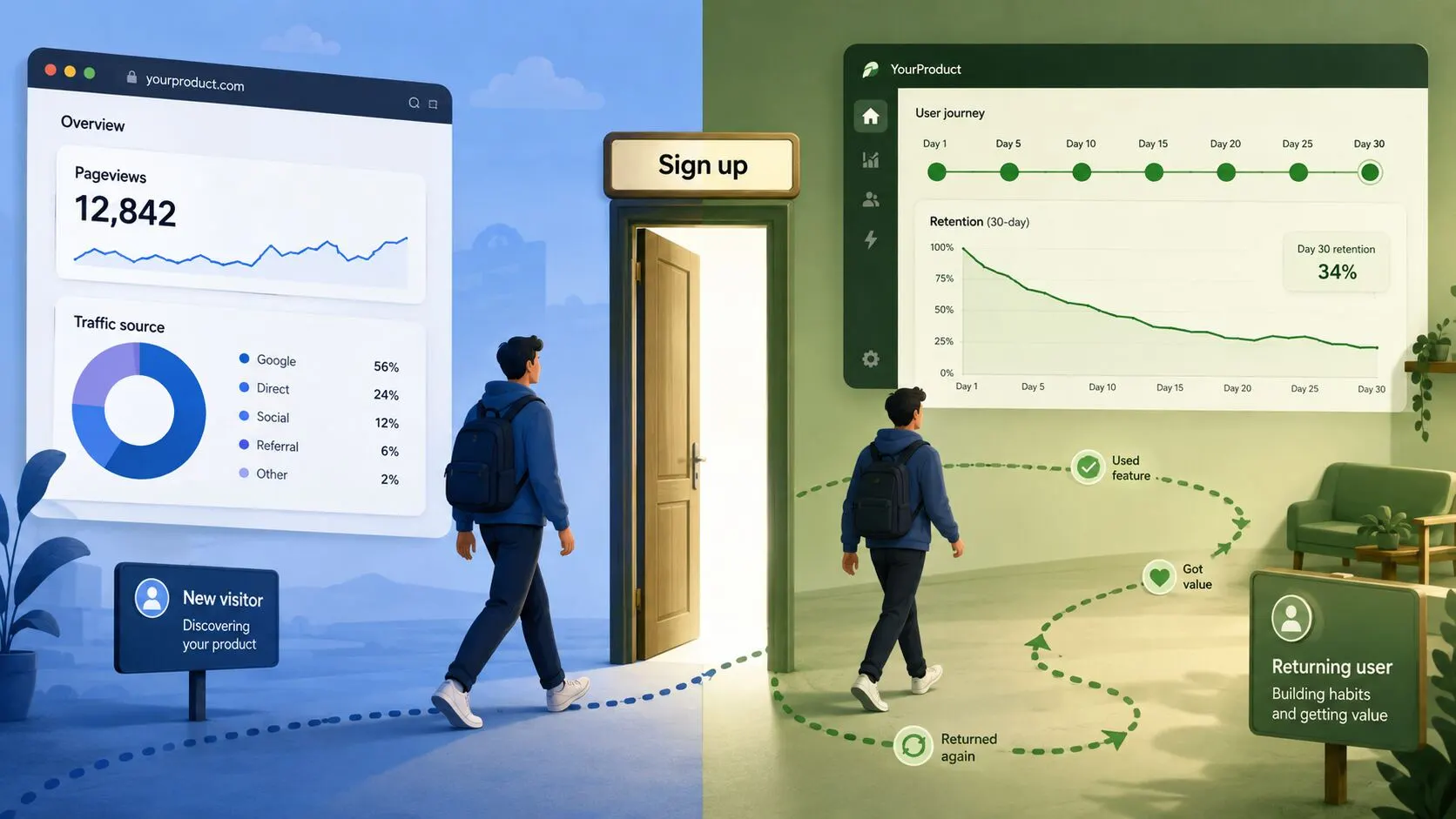
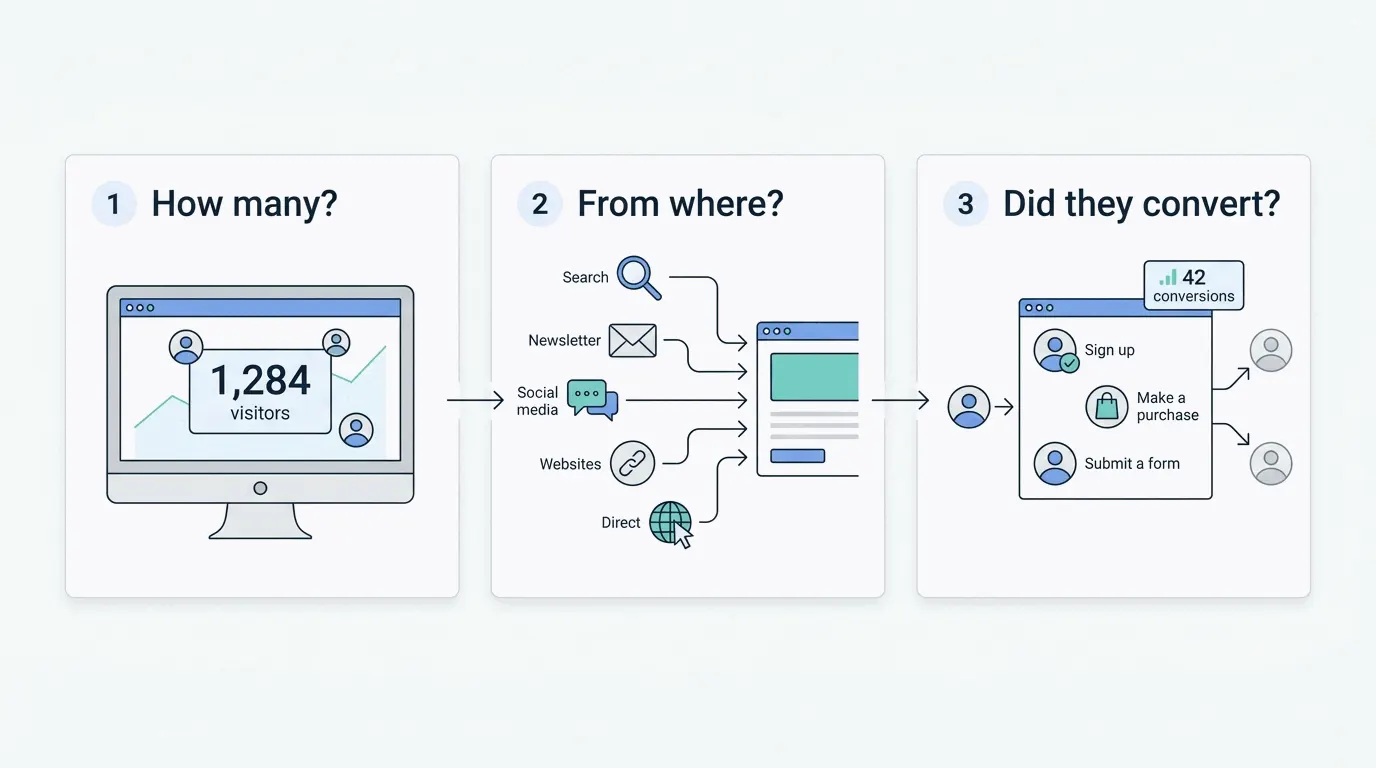
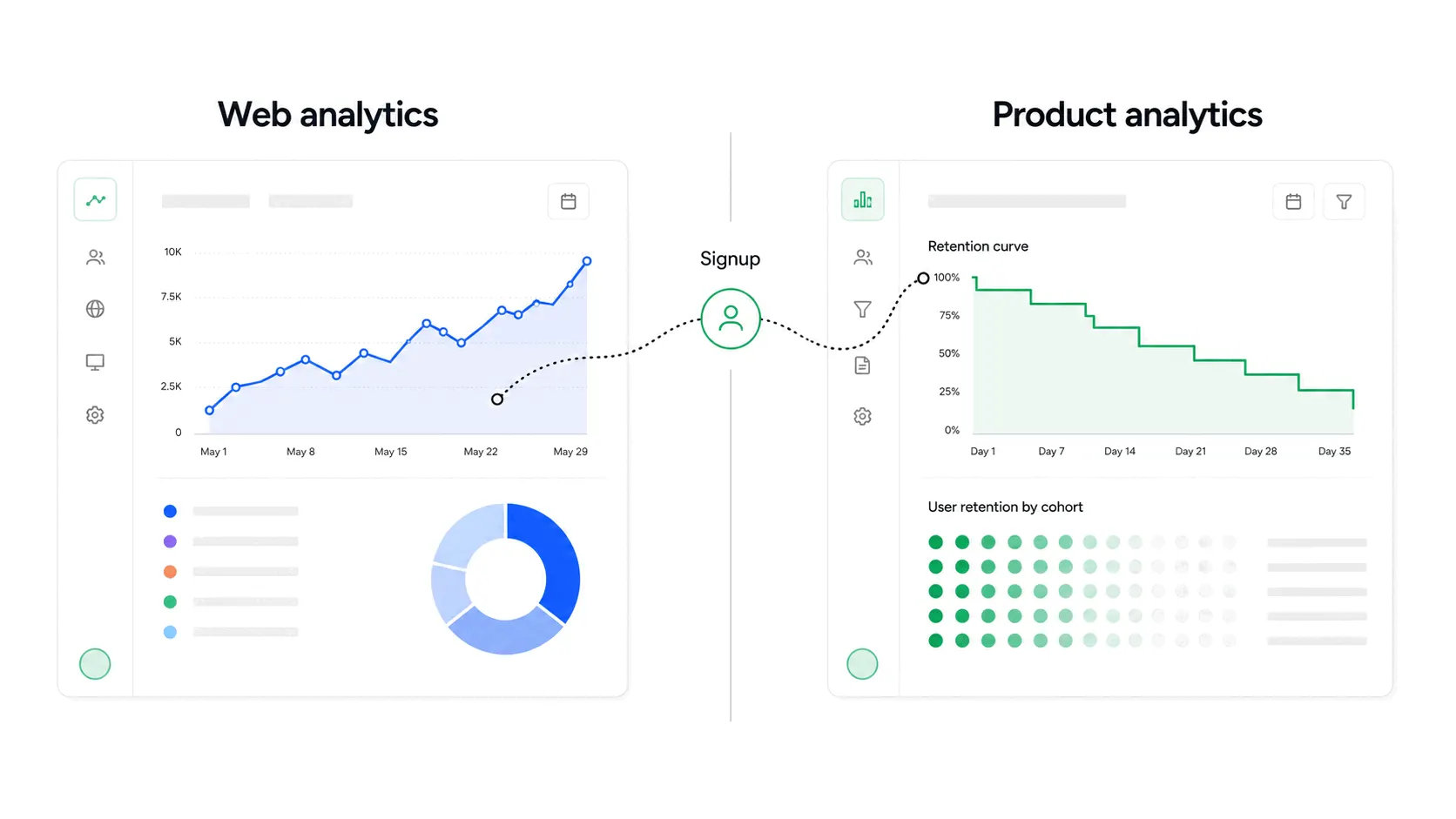
Web analytics measures a website: how many people came, from where, what they viewed, whether they did the one thing the site wanted. Product analytics measures a product: what signed-in users do inside it, whether they reach value, whether they come back next week. Same underlying visitors, different half of their journey - web analytics owns everything up to the signup, product analytics everything after.
The confusion is recent and earned. The categories used to be separated by technology; now they're separated mostly by the questions asked, and several tools straddle the line. Knowing which questions are yours settles the choice faster than any feature comparison.
The data model: pages vs people
Classic web analytics is organized around the page and the session - anonymous visits, aggregated. Product analytics is organized around the identified user and the event - "invited a teammate", stamped with who and when, accumulating into a per-person history that spans months. That history is the technical heart of the difference: retention questions are unanswerable without knowing that today's user is also last month's.
The line has blurred at the plumbing level - GA4 records everything as events too, and the pipeline is the same machinery either way. What hasn't blurred is identity. Web analytics tools work hard to count anonymous strangers roughly once; product analytics tools assume a login and count exactly. Which events you record matters more in the product world, where the events are the product's vocabulary.
Different questions, different metrics
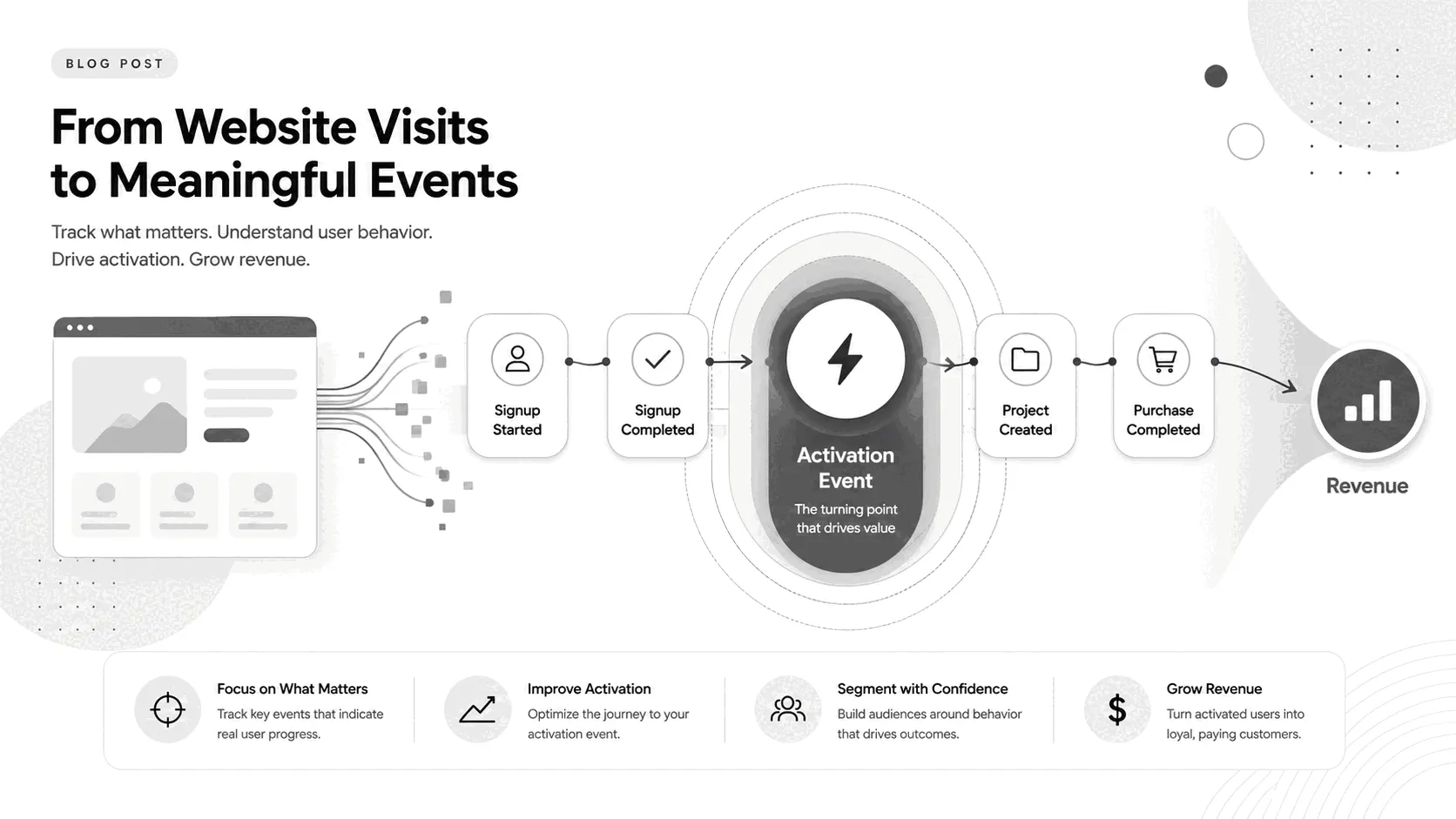
The metric vocabularies follow: traffic, sources, bounce and conversion on one side; activation, retention, adoption and churn on the other. Funnels are the crossover concept that lives happily on both sides - the website version ends at signup, the product version starts there. Activation rate is usually the first metric a team adopts after crossing the line.
The fastest test is which of these sound like your Monday morning:
- Web analytics questions - Where did last week's visitors come from? Which pages pull search traffic? Did the new landing page convert better than the old one? What share of visitors becomes signups?
- Product analytics questions - Do users who signed up in June still use us in August? Which features do paying accounts touch, and which did we build for nobody? Where in the first session do new users stall? What did the users who stayed a year do in week one?
When web analytics is enough
If nobody logs into anything on your site, the answer is short: web analytics is the whole job. A content site, a portfolio, a store or a small services business measures its success in visits, sources and conversions, and a product analytics tool pointed at it would show an empty retention chart. This describes most websites.
When you need both - and whether that means two tools
The moment your site has signups, the questions split. Marketing keeps asking web questions about the public pages while the product team starts asking retention questions about the app, and answering both from one page-centric tool is where GA4-for-everything setups quietly fail. The traditional answer is two tools: a web analytics tool for the site, plus a dedicated product analytics platform - Amplitude, Mixpanel, Heap or PostHog, each with a free tier to start on, PostHog being the open-source, self-hostable one of the four.
The newer answer is one tool that spans the line. Bigdelta, for example, pairs its web analytics with user profiles - every pageview, event and purchase for a person in one chronological view - and funnels over those events, so the anonymous visit and the signed-in life connect without stitching two datasets together. The two-tool setup buys more depth on each side; the one-tool setup buys the join. Which trade wins depends on whether your hardest questions cross the signup line.
The practical takeaway
Sort your open questions into the two Monday-morning lists above. All in the first list: web analytics, done. Both lists with a login between them: you need product analytics too, and the real decision is two tools or one - two for depth, one for the joined-up view of the same person before and after signup. Either way, start by writing down the five to ten events that mean a user is getting value; every tool on either side of this line is only as good as that list.