What is product analytics? A plain-English guide
Web analytics watches how strangers find your site; product analytics watches whether signed-in users stay. What the term covers, the concepts behind it, and when a site actually needs it.
What is product analytics?
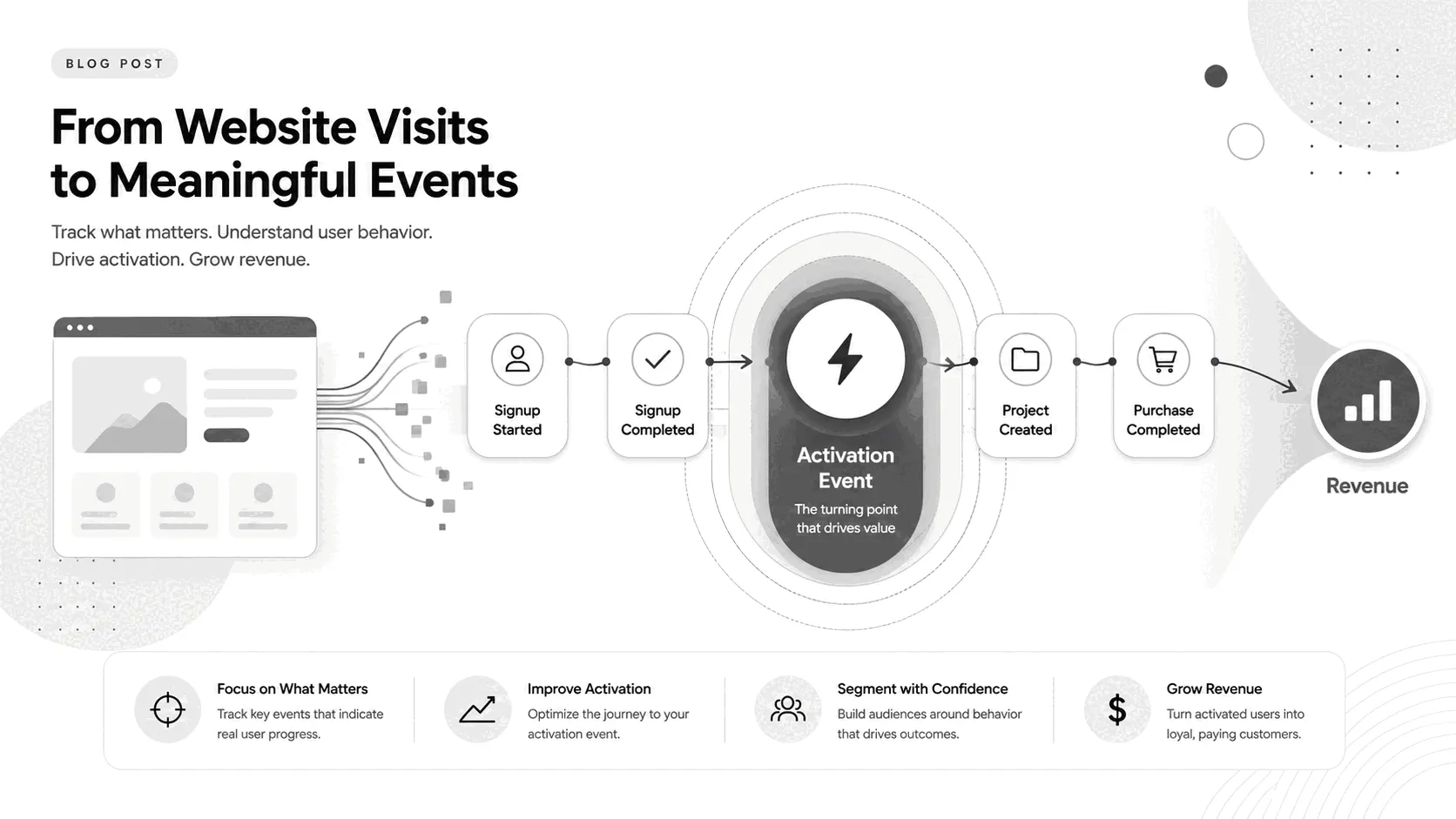
Product analytics is the measurement of what people do inside a product: which features they touch, how far they get on their first day, whether they come back next week. The unit of measurement is the event - a recorded action like "created a project" or "invited a teammate", each stamped with who did it and when. Pile up enough events and you can answer questions no pageview count can, because the questions are about behavior over time, not visits.
The term grew up around software products - anything with a login - which is why the vocabulary is all activation, retention and adoption rather than traffic and bounce rate. If your site is a blog or a brochure, most of this post describes problems you don't have, and that's a fine outcome to read for.
How is it different from web analytics?
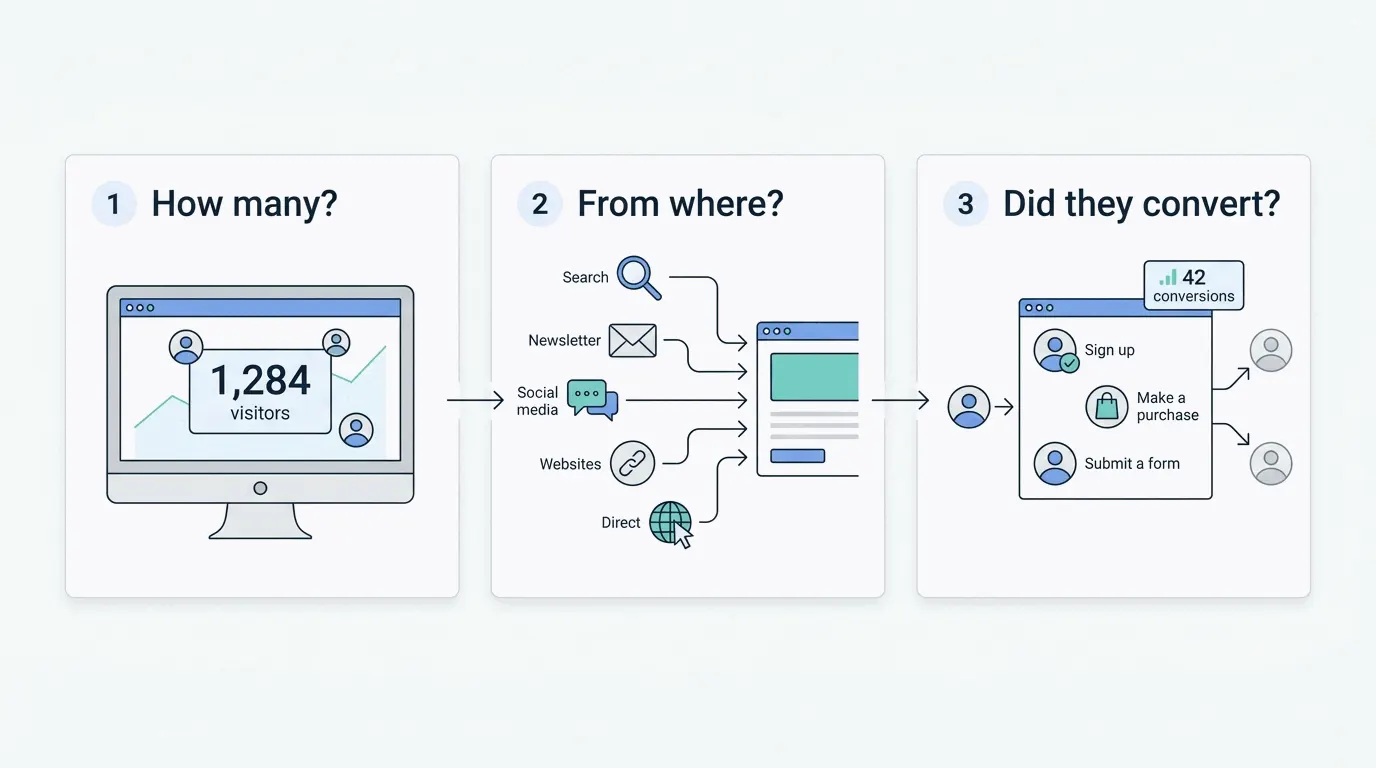
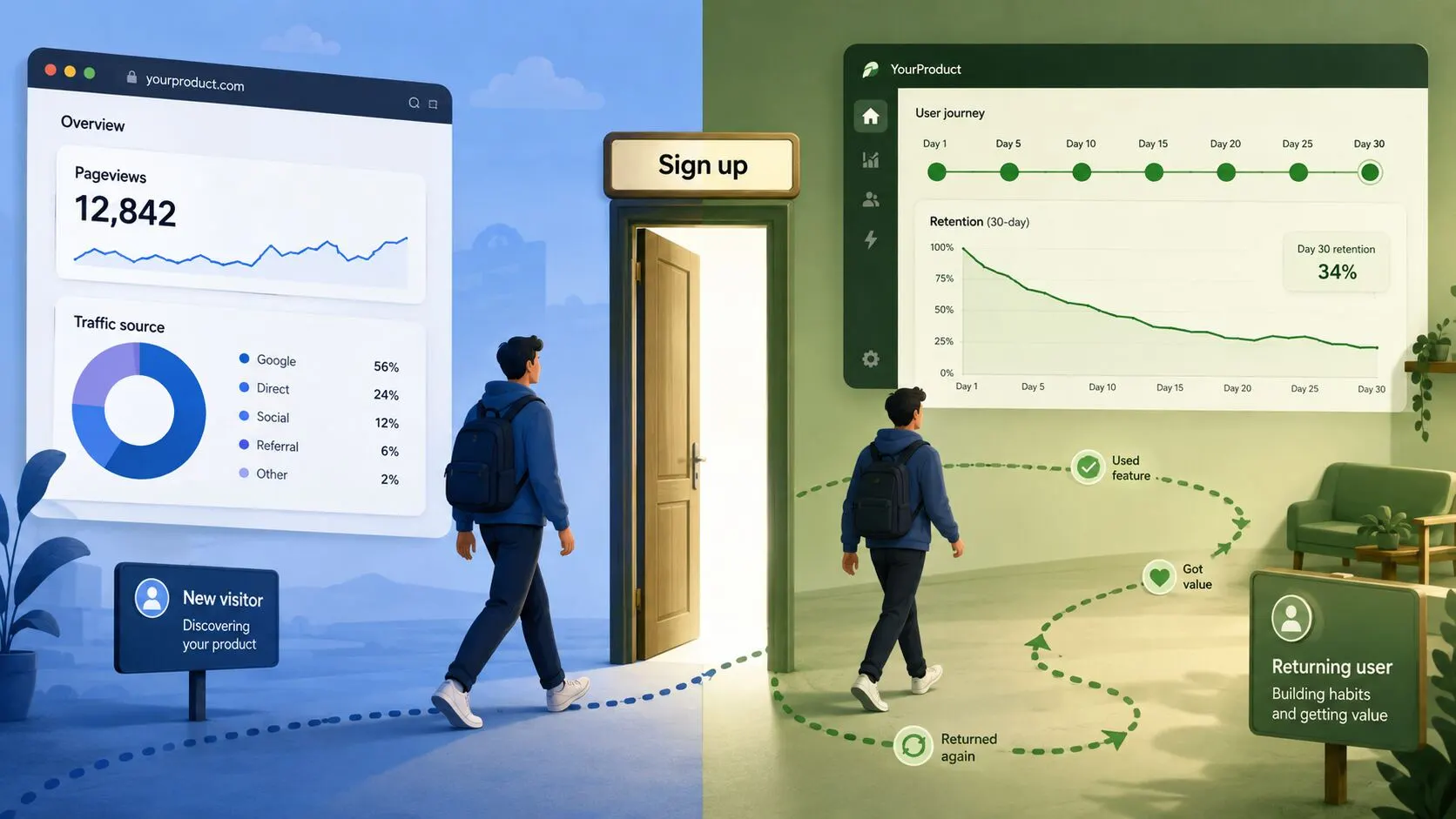
Web analytics is built around the page and the visit: how many people came, from where, what they looked at, whether they did the one thing the site wanted. Its natural territory is the acquisition side - the part of the journey where visitors are still strangers. Product analytics is built around the person and the action: it follows an identified user across days and months, and its natural territory starts where web analytics goes quiet, right after the signup.
The technical line has blurred. GA4 famously moved to an event-based model - everything it records, pageviews included, is an event - so "web analytics counts pages, product analytics counts events" is no longer strictly true. What still separates them is the question being asked. "Did the redesign lift signups?" is a web analytics question. "Do the people who signed up in June still use us in August?" is a product analytics question, and answering it requires knowing who each user is across sessions - the thing page-centric tools were never built to do.
The concepts that keep coming up
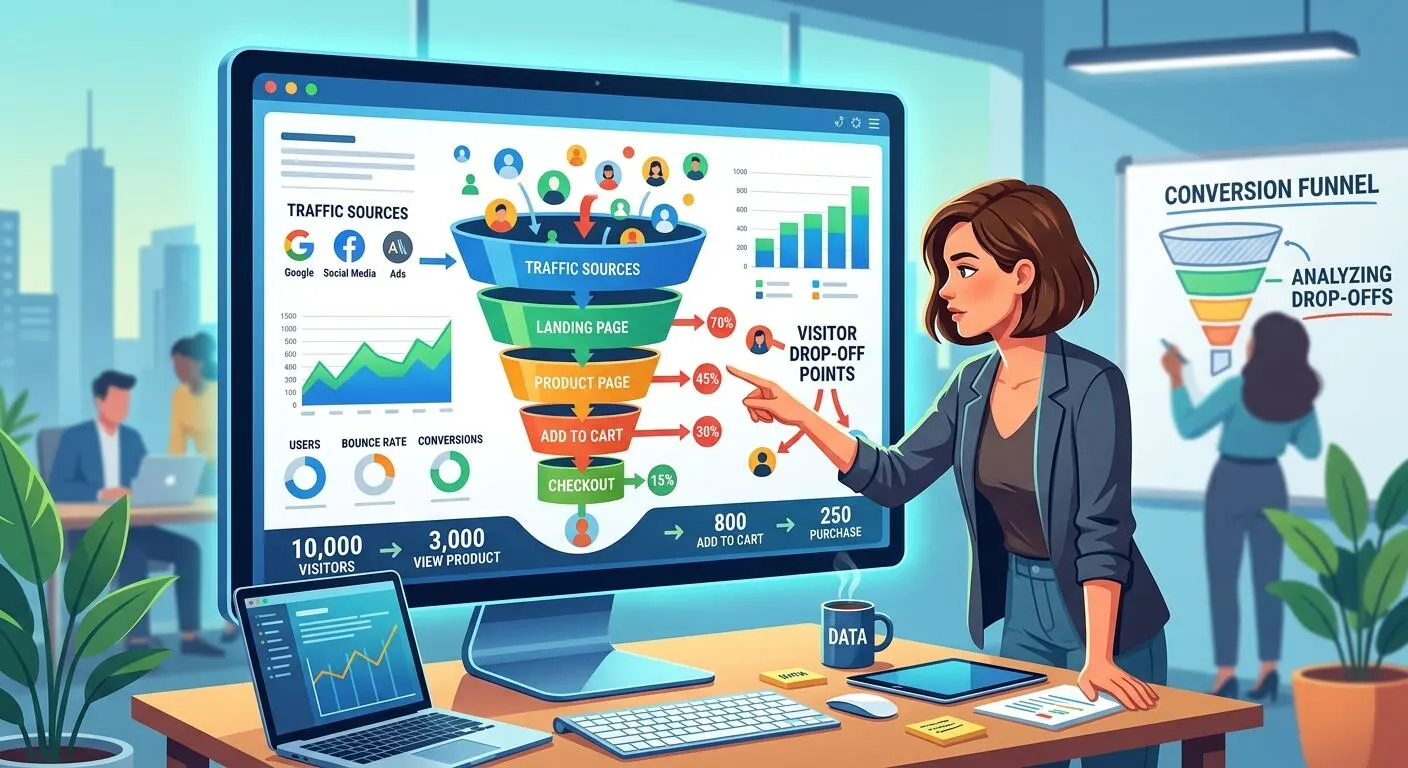
Funnels are the crossover concept - they exist on both sides of the line, and the funnel post covers the website version in full. For the events side, choosing what to track matters more than any tool choice: a product analytics setup is only as good as the ten or so events it's built on.
Five ideas carry most of the field:
- Events and properties - the recorded actions, plus their details (which plan, which device, which template). Deciding which events to record is the real setup work.
- User identification - connecting a person's anonymous browsing to their signed-in self, so their history reads as one story instead of fragments.
- Funnels - the ordered steps toward a goal and where people quit between them.
- Retention and cohorts - grouping users by when they started, then watching what share of each group returns each week. The chart that separates a leaky product from a growing one.
- Activation - the early moment when a new user first gets real value; the strongest predictor of whether they'll still be around later.
What questions does it answer?
The recurring ones: which features do paying users actually use, and which ones did we build for nobody? Where in the first session do new users stall? What do the users who stuck around for a year have in common with each other - and not with the ones who churned? Did last month's release change any behavior at all? Each is a question about identified people acting over time, which is exactly the data shape product analytics keeps.
Do you need it?
If nobody logs into anything on your site, no. Web analytics answers a content site's real questions - traffic, sources, conversions - and a product analytics tool would just be an empty retention chart. The need starts when "do they come back?" becomes a question you can't answer, which for most SaaS and app teams is roughly the day the first users sign up.
The dedicated tools are Amplitude, Mixpanel, Heap and PostHog - all built around the event-funnel-retention core, differing mainly in audience (PostHog courts developers and can be self-hosted; Pendo bundles in-app guides). Some analytics tools cover both sides of the line in one place: Bigdelta, for example, pairs its web analytics with user profiles - every pageview, event and purchase for a person in one chronological view - and funnels over those events, so the pre-signup visit and the post-signup life connect without a second tool. GA4 sits somewhere in the middle: event-based, free, but you'll fight it for retention answers a purpose-built tool gives in a click.
The practical takeaway
Web analytics tells you how people arrive; product analytics tells you whether they stay. Sites without logins only need the first. Products live or die on the second - and the cheapest way to start is not a tool but a decision: write down the five to ten actions that mean a user is getting value, instrument those, and let the funnels and retention charts grow from there.