What is digital analytics?
The umbrella over web, product, marketing and experience analytics - what the term actually covers, why the field renamed itself, and which of the four you need for the problem in front of you.
The umbrella term
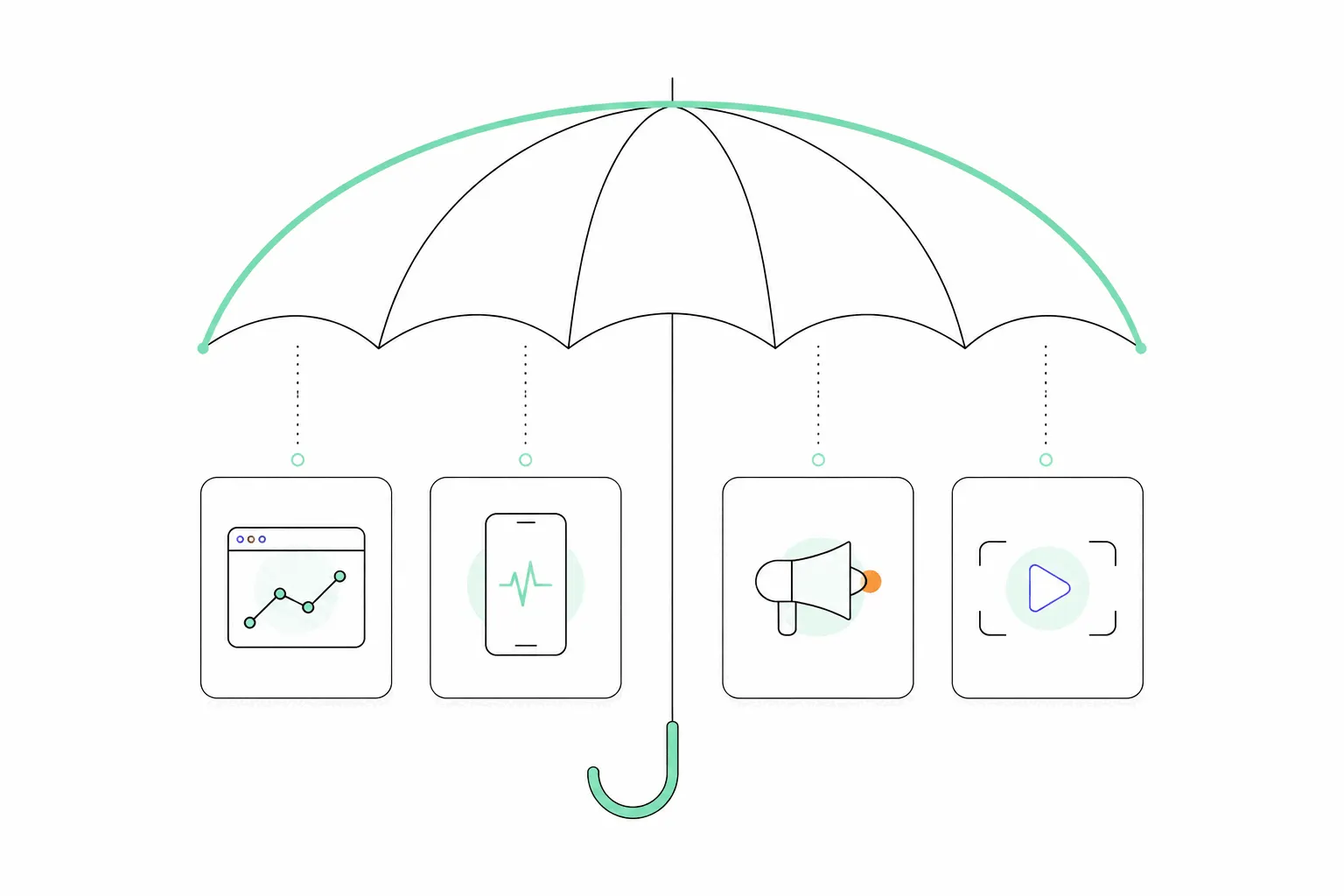
Digital analytics is the practice of measuring how people behave across a business's digital touchpoints - website, mobile app, emails, ads, in-product activity - and using the measurements to improve outcomes. It's an umbrella, not a tool category: web analytics lives under it, and so do several siblings that get mistaken for it. Adobe, whose product is the enterprise reference point here, defines it as collecting data from multi-channel digital experiences across the customer journey - deliberately wider than any one channel.
If you run a website and want to know who visits, you don't need the umbrella. You need web analytics, and the pillar guide covers it. This post is for the adjacent moment: when the terms start overlapping in vendor pitches and job titles, and you need to know which room of the building you're actually in.
Why it stopped being called web analytics
The name is a fossil record of the field growing. Through the 2000s the discipline was "web analytics" - counting what happened on websites - and its professional body was the Web Analytics Association. In 2011 that body renamed itself the Digital Analytics Association, on the reasoning that the data had stopped being only about the web: mobile apps, email, social and ad platforms were all producing behavioral data that needed the same treatment. The rename stuck, and "digital analytics" has been the wide term since.
The four rooms under the umbrella
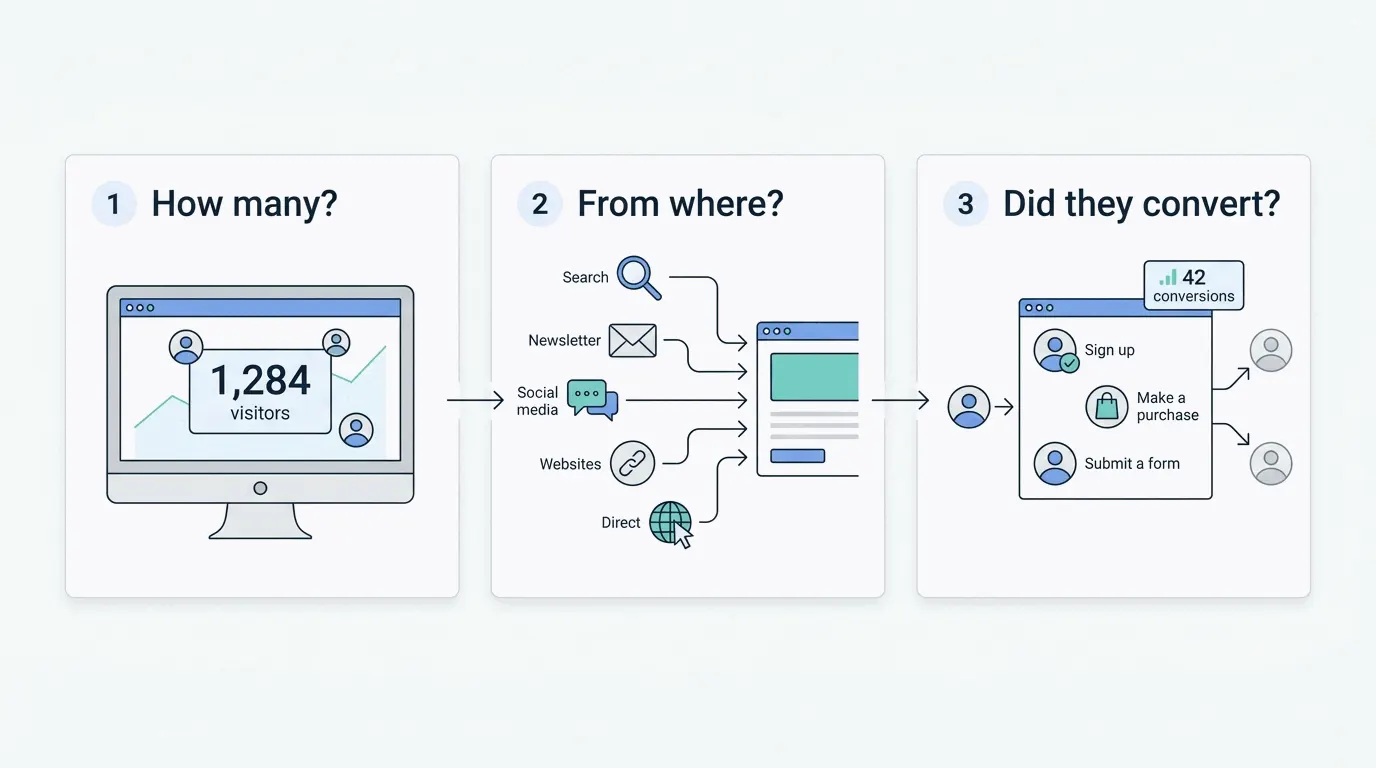
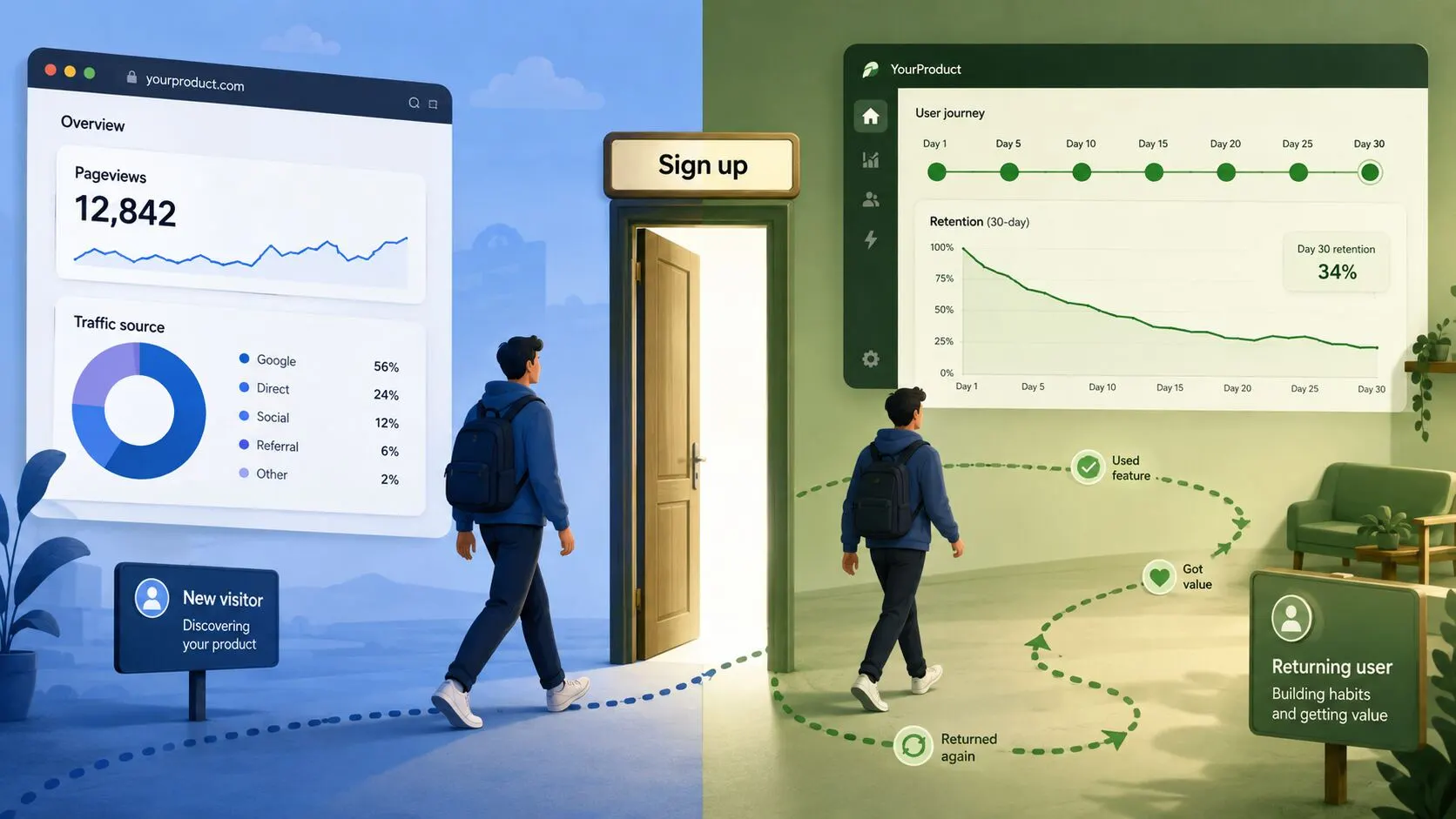
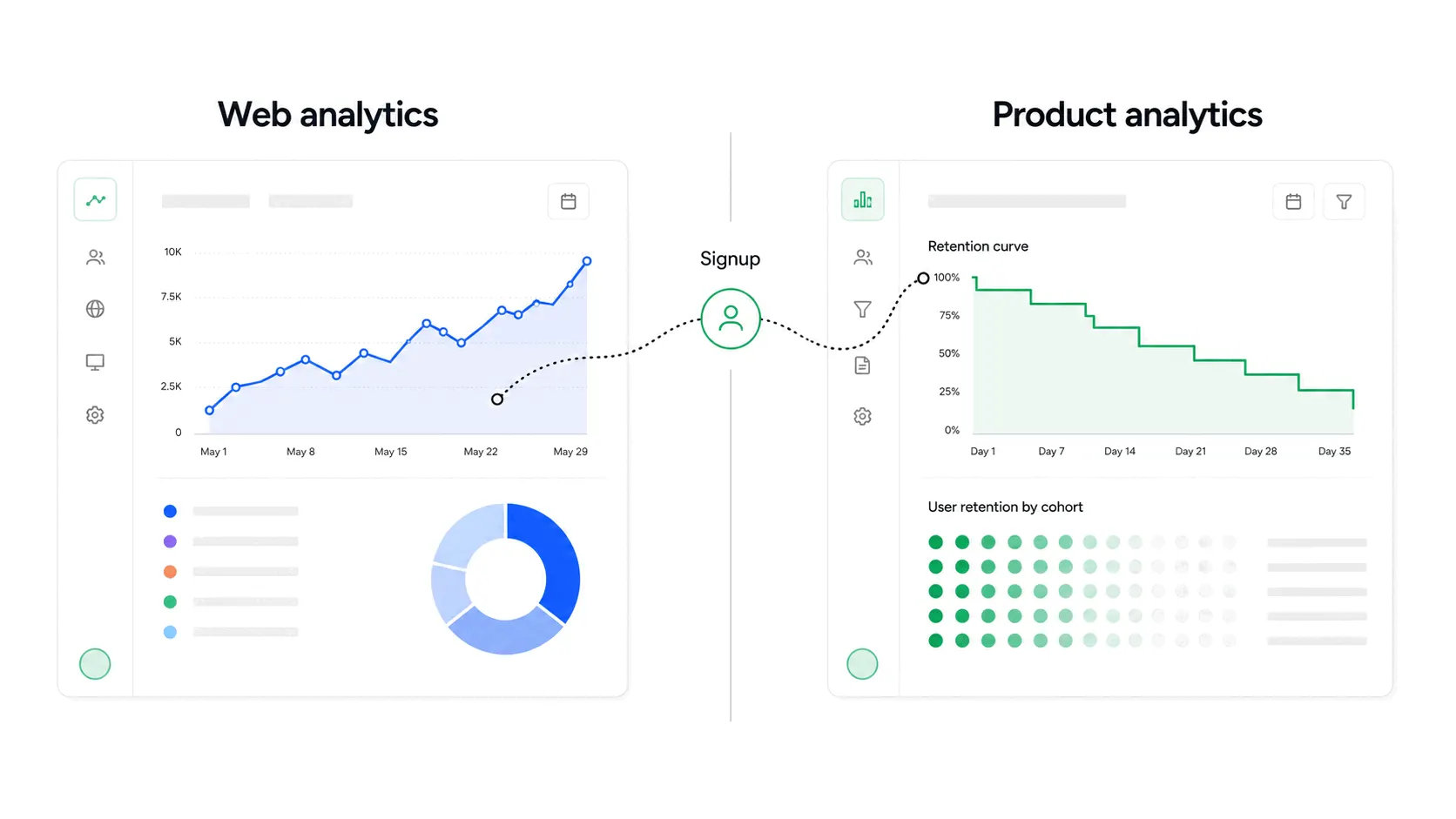
In practice the umbrella covers four overlapping specialties. Web analytics measures websites: visitors, sessions, sources, pageviews - anonymous traffic, mostly read by marketers. Product analytics measures what logged-in users do inside a product: features, retention, activation - read by product teams. Marketing analytics measures campaigns across channels: spend, attribution, return - the territory where analytics and ad platforms famously disagree. And customer experience analytics watches the qualitative layer: session replays, heatmaps and behavior signals that show friction the counts can't.
The boundaries are honest but soft. The web-vs-product line is the one most teams actually straddle, since the same visitor crosses it the moment they sign in.
Where digital analytics ends
Above the umbrella sits business intelligence, which is wider still: BI ingests everything a company records - finance, operations, inventory, HR - while digital analytics stays with behavioral data from digital touchpoints. A revenue-per-region warehouse query is BI. A funnel showing where signups stall is digital analytics. The tools reflect the split: BI platforms assume analysts writing queries, while digital analytics tools assume marketers and product people reading prebuilt views.
One more boundary, historical this time. Avinash Kaushik's Web Analytics 2.0, the 2009 book that shaped the field, defined the job as combining quantitative and qualitative data to continuously improve the customer's online experience - outcomes, not pageviews. That framing is why the modern umbrella includes replays and experience data rather than stopping at counts. It aged well.
Which one do you need?
Map the question, not the org chart. "Where do visitors come from and what do they read?" is web analytics. "Which feature keeps users coming back?" is product analytics. "Did the campaign pay for itself?" is marketing analytics. "Why do people abandon this form?" is experience analytics - a replay will show you. Most small teams need the first seriously, the fourth occasionally, and the middle two only once there's a product with logins or a real ad budget.
Tool-wise the rooms are converging. GA4 tries to span web and product measurement in one schema. Bigdelta joins web analytics with the product side and session replays on one dataset, which is the small-team version of the same idea. The umbrella term mostly matters so a vendor saying "digital analytics platform" doesn't convince you it does all four rooms equally well. Few do.
The practical takeaway
Digital analytics is the family name for measuring behavior across digital channels. Web, product, marketing and experience analytics are the members doing the actual work. Start from your question, pick the member that answers it, and let the umbrella stay a word for conference talks. For most site owners the honest answer is web analytics first - here's how it works - with the others joining as the business grows into them.