What is organic traffic?
Unpaid clicks from search results. The referrer check behind the label fails often enough that some organic gets filed as direct, the search terms moved to Search Console years ago, and AI answers are now cutting into the clicks themselves.
What counts as organic traffic
Organic traffic is visitors who reached your site by clicking an unpaid search result - someone typed a question into Google or Bing, your page appeared, they clicked. No ad spend was involved, which is why the channel gets treated as the prize: those visitors were already looking for something you have.
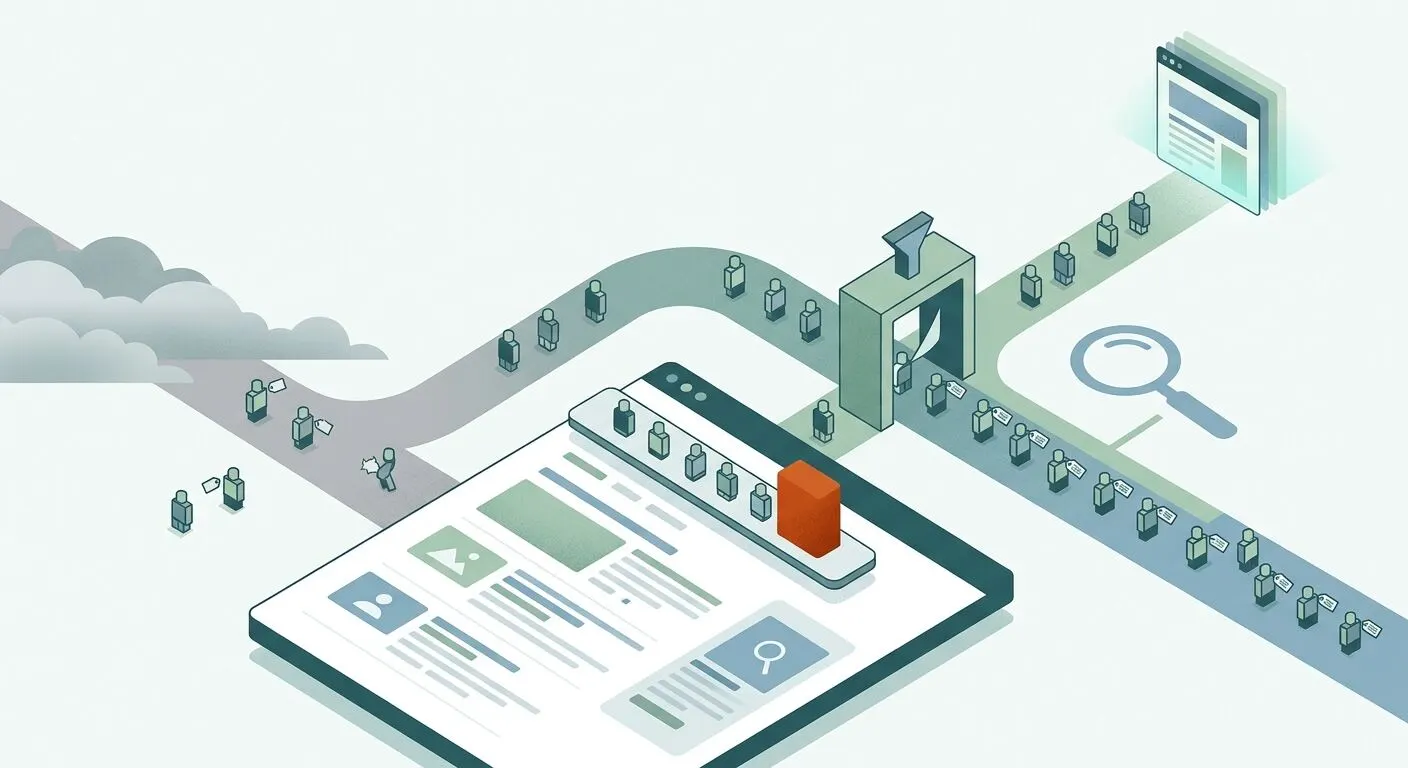
The classification is mechanical. When a visit arrives, your analytics tool reads the referrer (the page the click came from) and checks it against a list of known search engines. GA4's documented rule files a session under Organic Search when the source matches its search-site list or the medium is set to "organic". Clicks from Google's AI Overviews and AI Mode count as organic too - Google's channel definitions say so explicitly. Traffic from ChatGPT, Gemini, Copilot and the other assistants gets its own separate "AI Assistant" channel in GA4, so it no longer muddies the organic number.
Organic search is one of the four standard buckets, next to direct, referral and paid - the full taxonomy has its own post. Organic social (unpaid clicks from Facebook, LinkedIn, Reddit) is a different channel despite sharing the word: "organic" only means nobody paid for the click.
Why your organic number runs low
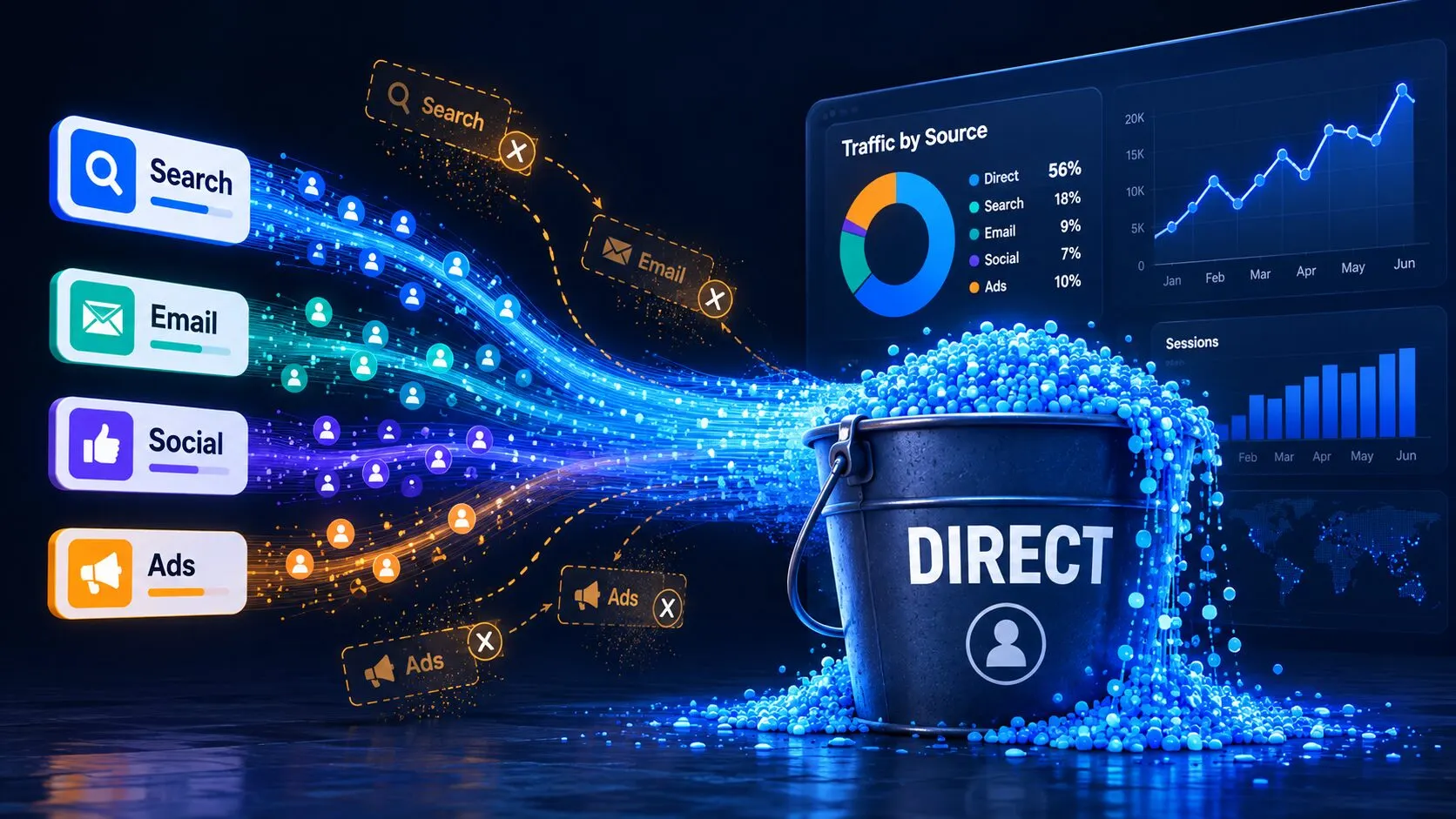
Classification depends on the referrer arriving intact, and it often doesn't. Safari's privacy features trim referrers, in-app browsers frequently drop them, and a click that arrives with no referrer at all gets filed as direct - the tool couldn't tell it came from a search page. The result is a steady leak from organic into direct that runs one way: misfiled organic clicks make direct look bigger and organic smaller, never the reverse.
There's a second, larger undercount on top: visitors running ad blockers or strict privacy browsers never reach your analytics at all, organic or otherwise. Your true organic traffic is higher than any report says. By how much depends on your audience - technical readers block more than shoppers do.
Where the keywords went
Analytics tools used to show which search terms brought each visitor. That ended in stages: Google encrypted searches for signed-in users in 2011, extended it to all searches in 2013, and the keyword column collapsed into "(not provided)". No analytics tool can see the search phrase behind an organic visit anymore.
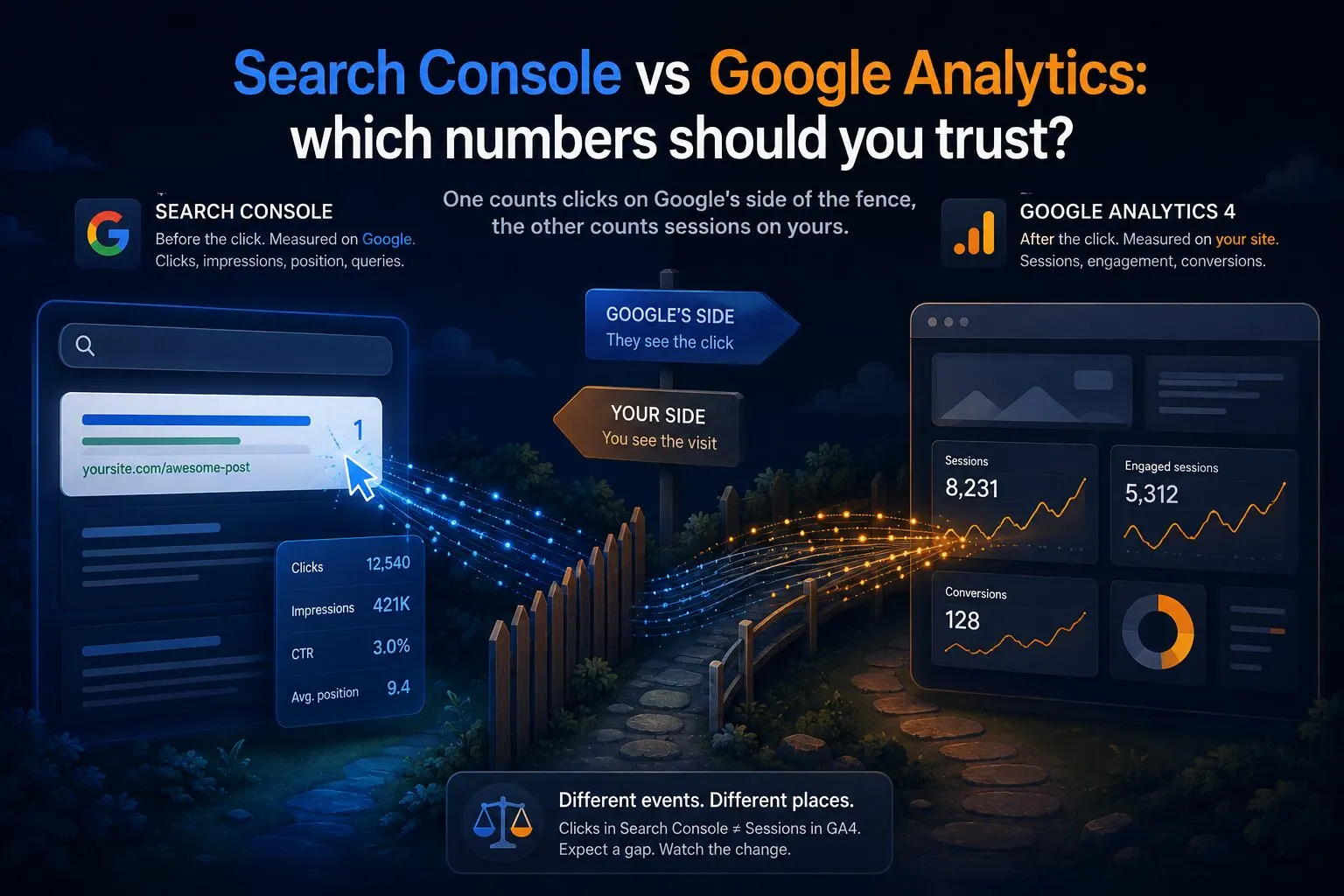
The keyword data didn't vanish - it moved to Google Search Console, which reports queries, impressions, clicks and average position from Google's side of the click, for up to 16 months. The practical split: your analytics tool tells you how many organic visitors came and what they did; Search Console tells you what they searched to find you.
What AI answers are doing to organic clicks
The freshest change to organic traffic is that a search no longer has to end in a click. When Google shows an AI Overview above the results, some visitors read the answer and leave. Pew Research Center measured this with actual browsing data from 900 U.S. adults in March 2025: users clicked a result on 8% of searches that showed an AI Overview, against 15% of searches without one.
Larger keyword studies point the same direction. Ahrefs compared 300,000 keywords in February 2026 and measured a 58% lower desktop click-through rate on queries with AI Overviews than the same queries had before Overviews existed. Seer Interactive tracked 53 brands through 2025 and found one consistent exception: when a brand was cited inside the AI answer, its click-through rate went up, not down.
The takeaway for a site owner is narrower than the headlines: informational queries lose clicks to AI answers, being the cited source softens the blow, and a flat organic line can hide rising impressions with falling clicks - which is exactly the pattern Search Console can confirm and your analytics tool can't.
How much of a site's traffic should be organic?
You'll meet two very different answers to this. A widely quoted BrightEdge study from 2019 put organic search at 53% of trackable site traffic. Semrush's 2026 analysis of 2025 clickstream data puts it at 16% of total visits.
Neither is wrong - they're dividing by different things. BrightEdge measured mostly larger sites and left direct traffic out of the denominator; Semrush counted every channel, across 17 industries, using panel data. Change the denominator and the share moves by more than three times. So treat any "X% of traffic is organic" claim as a description of one methodology, and benchmark your own organic share against your own history instead - the trend in your number beats anyone else's average.
How to check your organic traffic
In GA4: Reports → Acquisition → Traffic acquisition, then filter the channel column to Organic Search. In Search Console, the Performance report shows the query side. In Bigdelta's web analytics, the source breakdown separates search engines from other referrers in real time, so the organic slice is on the dashboard rather than behind a filter.
Whichever tool you read, remember the two houses' numbers won't match - they count different things at different moments, and the gap is normal.
The practical takeaway
Organic traffic is unpaid search clicks, classified by referrer - which makes it precious and slightly undercounted at the same time. Read it alongside Search Console's query data, expect some of it to hide inside direct, and watch impressions as well as clicks now that AI answers sit between you and the searcher. Search demand hasn't dropped; the share of it that turns into a visit has.