Search Console vs Google Analytics: which numbers should you trust?
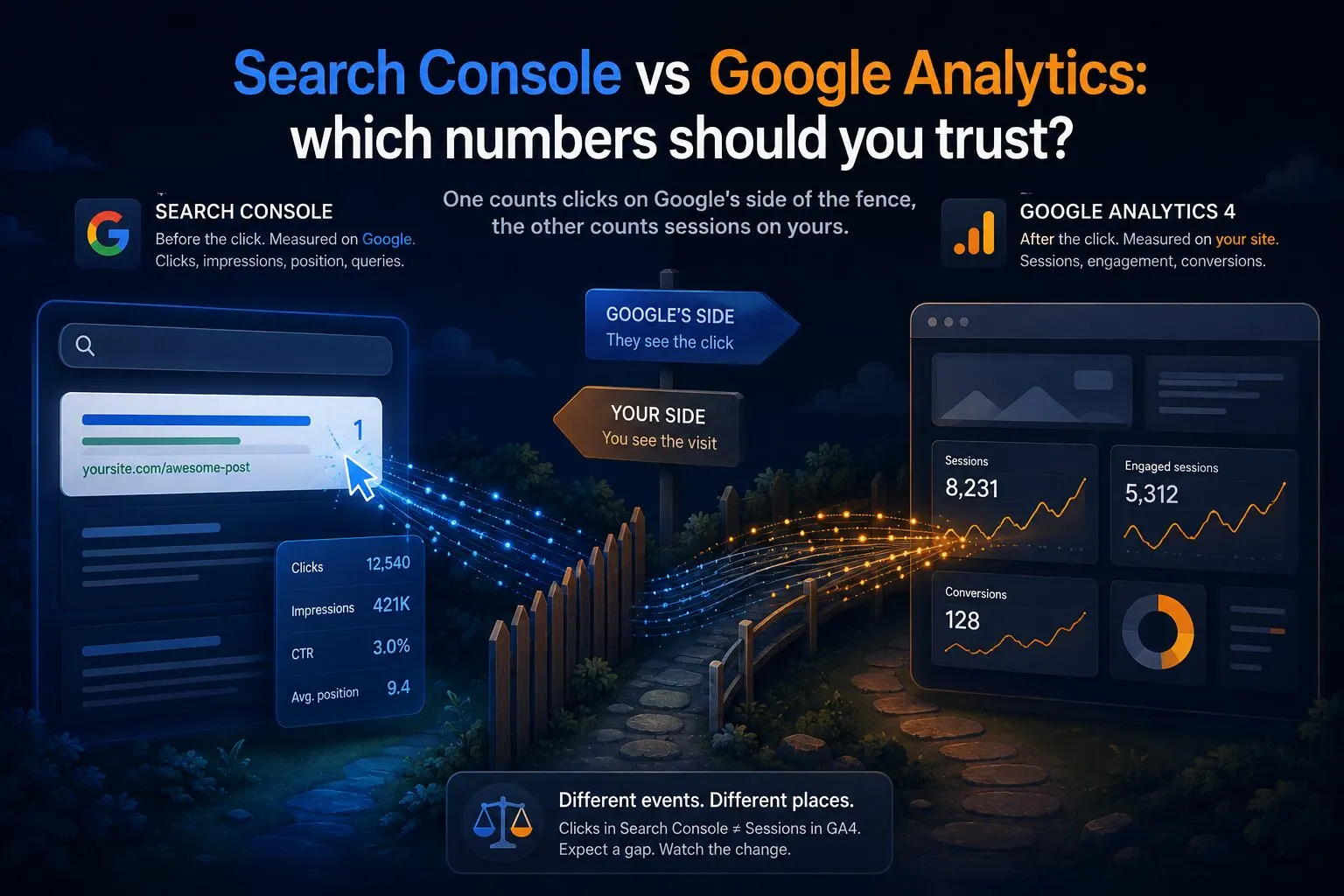
One counts clicks on Google's side of the fence, the other counts sessions on yours, and they have never once agreed. Where each number comes from, the documented reasons for the gap, and when a mismatch actually means something broke.
Two tools, two vantage points
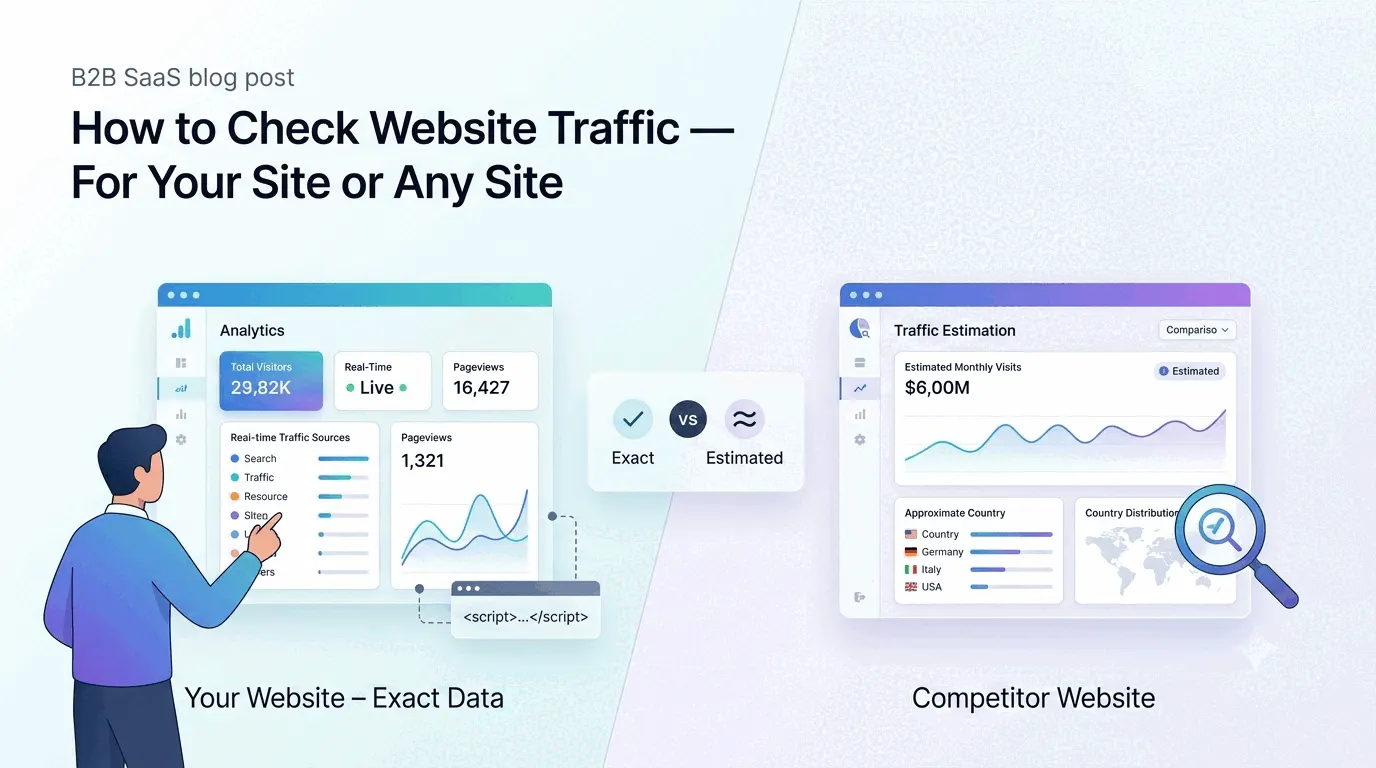
Search Console reports what happened on Google: your pages appeared in search results this many times, got clicked this many times, at this average position, for these queries. All of it is measured on Google's servers, before your site is even involved — no script to install, nothing for an ad blocker to block. As the traffic-without-Google-Analytics post puts it, it's Google's side of the click, for Google organic only.
Google Analytics reports what happened on your site: a JavaScript snippet on your pages records sessions, pageviews and everything after the landing — website analytics, in other words. That vantage point covers every source — search, social, email, direct — but only for visitors whose browsers actually ran the script. The two tools don't measure the same event from two angles; they measure two different events. Expecting the numbers to match is the original mistake.
Why the numbers never match
Line up Search Console clicks against GA4's organic sessions for the same period and you'll find a persistent gap. Google's own documentation calls the difference normal and lists the causes; the ones that matter in practice:
- A click is not a session — someone who clicks your result, leaves, and comes back later that day is one click but can be two sessions, or two clicks collapsing into one session in the other order
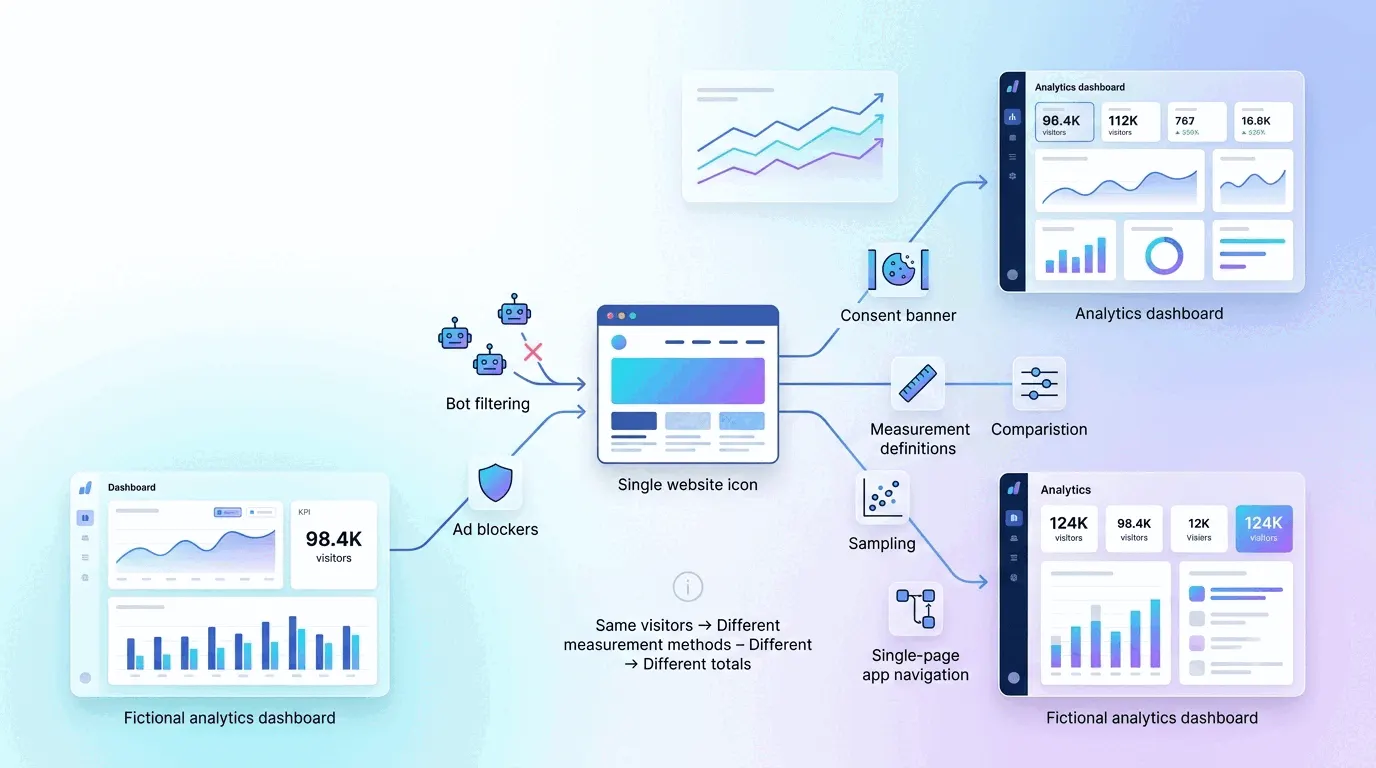
- Blocked scripts — ad blockers and privacy browsers stop the analytics snippet but can't touch Google's server-side count, so a slice of real visitors exists only in Search Console; clicks running above sessions is the expected direction of the gap
- Canonical vs actual URLs — Search Console credits the canonical URL it chose for a page; analytics credits the URL the visitor actually landed on, so per-page numbers split differently when variants exist
- Timezones — Search Console days are Pacific Time, your analytics days follow the property's timezone, so daily numbers are sliced at different midnights
- Hidden rare queries — Search Console leaves very rare queries out of the query table for privacy while still counting their clicks in the totals, so filtered rows never sum to the headline number
- Redirects — Search Console credits the URL that stood in the results at click time; analytics credits wherever the visitor ended up
The gap is a diagnostic
None of those causes are fixable, and none need fixing — they're properties of measuring different things in different places. Since the gap is permanent, the useful signal is its shape. A steady, boring difference — Search Console clicks reliably some fraction above GA4 organic sessions — is two healthy instruments disagreeing for the documented reasons. What deserves attention is a change in the relationship.
Search Console holds the trump card in one specific argument, because its count can't be broken by anything on your site. If it shows steady clicks while your analytics shows organic traffic collapsing, the visitors are still arriving — your tracking broke. The reverse divergence points the other way: analytics organic climbing while Search Console holds flat suggests the new traffic isn't really Google organic, just something mislabeled as it. Trends moving together means both tools are fine; trends splitting apart means go find out which one is lying, and about what. Part of that noise is traffic no script can see.
Which tool for which question
The clean division: Search Console answers before-the-click questions, analytics answers after-the-click ones. Which queries bring people in, which pages earn impressions but no clicks, whether a title change moved the click-through rate, whether Google can crawl the site at all — Search Console, and nothing else, knows. What visitors did after arriving, whether they signed up or bought, which landing page holds attention and which sheds it — that's the analytics side, where bounce and engagement and conversion tracking live.
The two also cover for each other's blind spots. Search Console sees searchers who never clicked — your invisible almost-audience. Analytics sees the sources Search Console has no opinion on, which for most sites is most of the traffic.
Link them, and mind the limits
GA4 can pull Search Console data in directly (Admin → product links), which adds reports pairing queries and landing pages with on-site behavior — worth the five minutes it takes. Two limits to plan around: Search Console keeps 16 months of history and no more, so anything longer-term needs periodic exports; and the query table's privacy filtering means the long tail of your queries is visible only as a gap between the rows and the total.
The takeaway is a division of trust rather than a winner. Trust Search Console on how you're doing in Google, trust your analytics on what happens after arrival, treat the permanent gap between them as background noise — and treat a sudden change in that gap as the most useful alarm either tool will ever ring.