FullStory alternatives (2026)
FullStory records everything and answers questions after the fact, at enterprise depth and enterprise process. Six alternatives, each matched to a reason teams move on.
Why teams move on from FullStory
The product itself rarely gets the blame. Four practical things do.
The price is a conversation, not a page. FullStory publishes three plan names, Business, Advanced and Enterprise, and no prices. Cost scales with recorded sessions, several capabilities are paid add-ons, and finding out what you would pay means requesting a demo. A free tier exists, called FullstoryFree, listed at 30,000 sessions a month with 12 months of retention at the time of writing, and the step beyond it runs through a sales process. Teams that want a number on a pricing page leave over this alone.
The depth assumes a team. The platform page lists over a dozen products, from product analytics and journeys to AI agents and workflow intelligence. A staffed research or product team lives happily in that. A marketing lead who wanted to watch checkout sessions opens a tenth of it, and the unused nine tenths are still part of the bill.
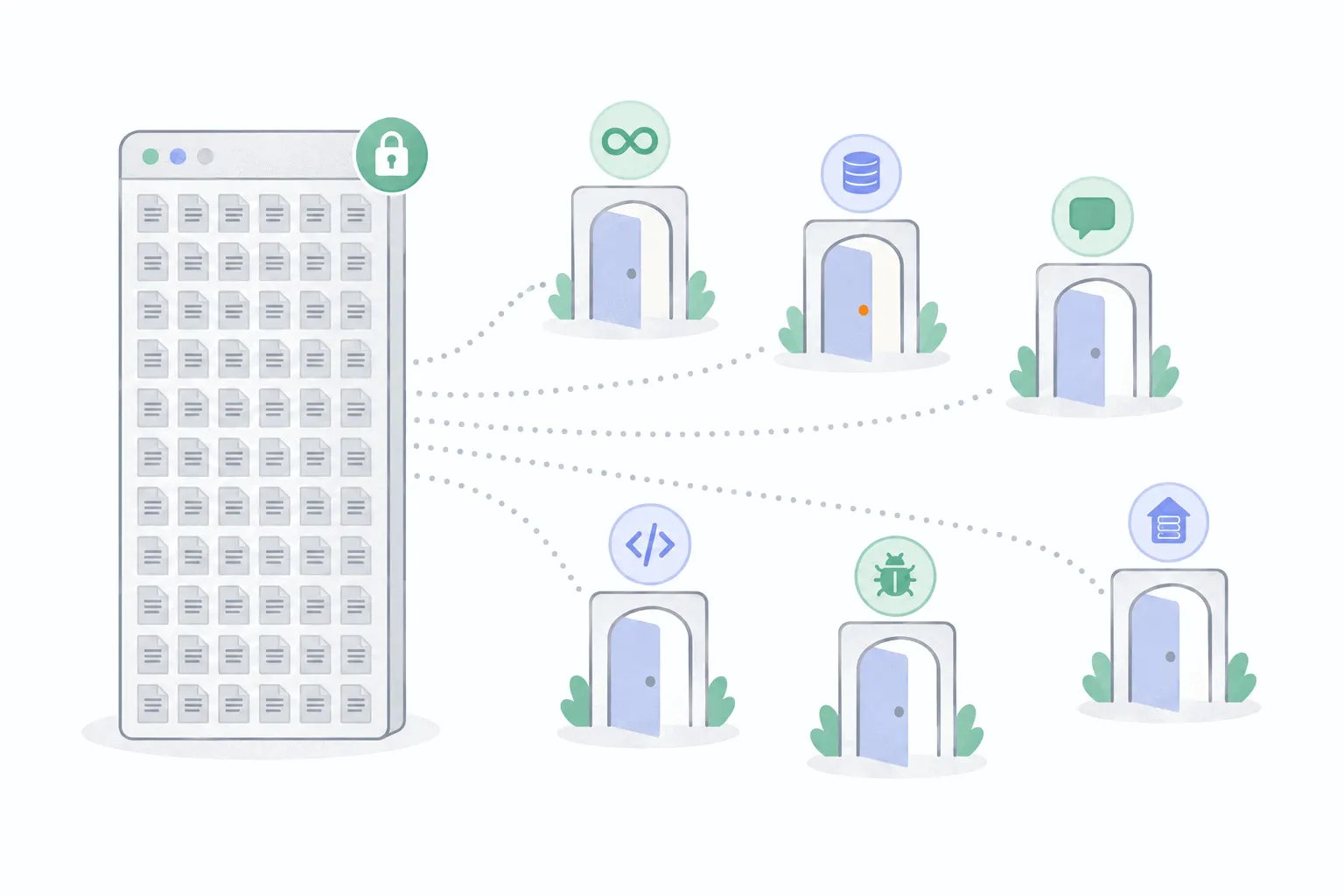
Capturing everything is a compliance project. "Automatically collect every interaction" is the pitch, and it is also the sentence a privacy review has to reckon with. An archive of every interaction means masking rules, retention decisions and a data-protection assessment that covers all of it, and the session replay GDPR checklist shows how much of that work scales with what you capture.
None of these is a flaw, exactly. They are the shape of an enterprise product, and the mismatch shows when a smaller team is paying for that shape without using it.
What separates the alternatives
Every tool below records sessions and draws heatmaps, so the separating questions sit elsewhere. Four are worth answering before reading any list:
- Is the price on a public page? Half the tools here publish numbers, and half of the switching stories start with a renewal quote.
- Who is meant to open it daily? Some tools assume a research team, some an engineer, some a founder with ten minutes. Matching this beats comparing feature grids.
- Do recordings connect to your other numbers? A standalone archive means asking questions inside it. Recordings joined to traffic and revenue mean starting from the number that hurts.
- Where does the data live? On the vendor's cloud, in the EU, or on your own servers. Legal usually answers this one before anyone watches a recording.
The free one: Microsoft Clarity
If the FullStory bill is the problem, Clarity is the blunt answer. Microsoft's own FAQ commits to free forever, no traffic limits and no sampling, so the recordings and heatmaps keep coming at any volume without a renewal conversation.
The trade-offs are the mirror image of what you leave. Recordings are kept for 30 days, so the ask-the-archive workflow FullStory sold you does not exist here. There is no product analytics layer, and the data lives with Microsoft, which some privacy reviews accept and some do not. The full picture, including what Clarity's FAQ says about data access, is in Microsoft Clarity alternatives, where Clarity plays the incumbent instead.
The connected one: Bigdelta
FullStory connects behaviour to behaviour. Bigdelta connects behaviour to the business: recordings and heatmaps share one script and one interface with web analytics, so a session arrives knowing which channel brought the visitor and what they were worth, down to subscription revenue attributed back to channels and landing pages.
The day-to-day difference is the starting point. Instead of querying an archive of everything, you start from a number, checkout sessions that ended in an exit, say, and watch exactly those visits. Replays filter to sessions with rage clicks, dead clicks or JavaScript errors. Data stays on EU servers. The free plan covers sites under 100,000 page views a month with up to 1,000 replays and a year of retention, and the paid plans are on a public pricing page.
What it does not try to be is a research platform. There are no AI agents, no survey tooling and no workflow products. A team leaving FullStory because the depth went unused tends to land well here. A team leaving while still using that depth daily should look at PostHog below instead.
The other suite: Contentsquare, which now includes Hotjar
A team that likes the everything-platform shape and dislikes only FullStory's version of it has one direct rival to consider. Contentsquare absorbed Hotjar, states the two have merged into one platform, and bundles heatmaps, replays, funnels, error monitoring and the piece FullStory never had: surveys, feedback widgets and the rest of the asking side.
It is still an enterprise product with enterprise pricing above its free tier, so the sales-process objection survives the move. The reason to switch is wanting visitor voice next to visitor behaviour in one place. The reason not to is that most of the platform overlaps what you just left. Best Hotjar alternatives covers the middle ground below both.
The engineering one: PostHog
PostHog is the switch for teams whose FullStory power users were engineers all along. It bundles product analytics, session replay, feature flags, experiments and surveys, describes itself as a single platform for people who build things, and captures clicks automatically so nothing needs tagging up front, the same no-tagging promise that made FullStory's name.
Two differences matter for this comparison. The codebase is open source, auditable on GitHub, which changes the privacy-review conversation. And pricing is usage-based and public, with the company claiming most of its users pay nothing. The cost is that PostHog assumes technical hands: the power sits behind SQL, flags and events, and a non-technical marketer will find Clarity or Bigdelta friendlier company.
The developer end: LogRocket and OpenReplay
When FullStory was really being used as a debugging tool, two options fit better than any suite. LogRocket positions itself as AI session replay that catches issues before users report them: every replay carries console and network logs, errors and performance data, and its Galileo AI ranks the issues and writes reproduction steps. For an engineering team triaging bugs, that context beats any marketing-side archive.
OpenReplay answers the data question instead. It is open source and self-hostable, so recordings never leave your own servers, with replay, funnels and developer tools included and a hosted cloud for teams that want the product without the ops. A company whose legal team balked at FullStory's everything-archive often finds that self-hosting is the shortest path to a yes. The wider field at both ends is compared in best session replay tools.
When FullStory is still the right pick
A staffed product or research team that queries the archive weekly, uses the journeys and AI agents, and has procurement muscle for the renewal is FullStory's actual customer, and none of the tools above will feel like an upgrade to them. The free tier also makes a defensible scaled-down home: 30,000 sessions a month with a year of retention is a real allowance, not a demo. The honest test is usage, so pull up who opened the tool last month before deciding anything. If the answer is one person, size the replacement for that person.
What a switch actually involves
Less than the procurement cycle suggests. Every tool here installs by swapping one script, and new data starts collecting within the hour. What does not move is the archive: recordings and the questions saved against them stay behind, and no replay tool imports another's sessions. The practical pattern is to time the switch to a renewal date, run the new tool in parallel for the last few weeks of the contract, and screenshot the handful of FullStory findings anyone still cites. History you lose, habits you rebuild in a week.
How to choose
Match the tool to the reason FullStory stopped fitting.
Whichever way you lean, run the candidate alongside FullStory before the contract renews. Every tool here installs with one script, the traffic is identical, and two weeks of parallel data answers more than any comparison page.
- The bill, and you want simple and free at any scale: Microsoft Clarity.
- Recordings connected to traffic sources, signups and revenue, with public pricing: Bigdelta.
- You want surveys and feedback in the same platform: Contentsquare.
- Your engineers are the real users and want the whole toolkit: PostHog.
- Replay is for debugging, with logs attached: LogRocket.
- Recordings may not leave your infrastructure: OpenReplay, self-hosted.
- The team genuinely lives in the archive: stay, or step down to the free tier.