Microsoft Clarity alternatives (2026)
Clarity is free, so the reasons to switch are specific: 30-day retention, data that lives with Microsoft, and no surveys or revenue context. Five alternatives, each fixing one of them.
Why look past a free tool
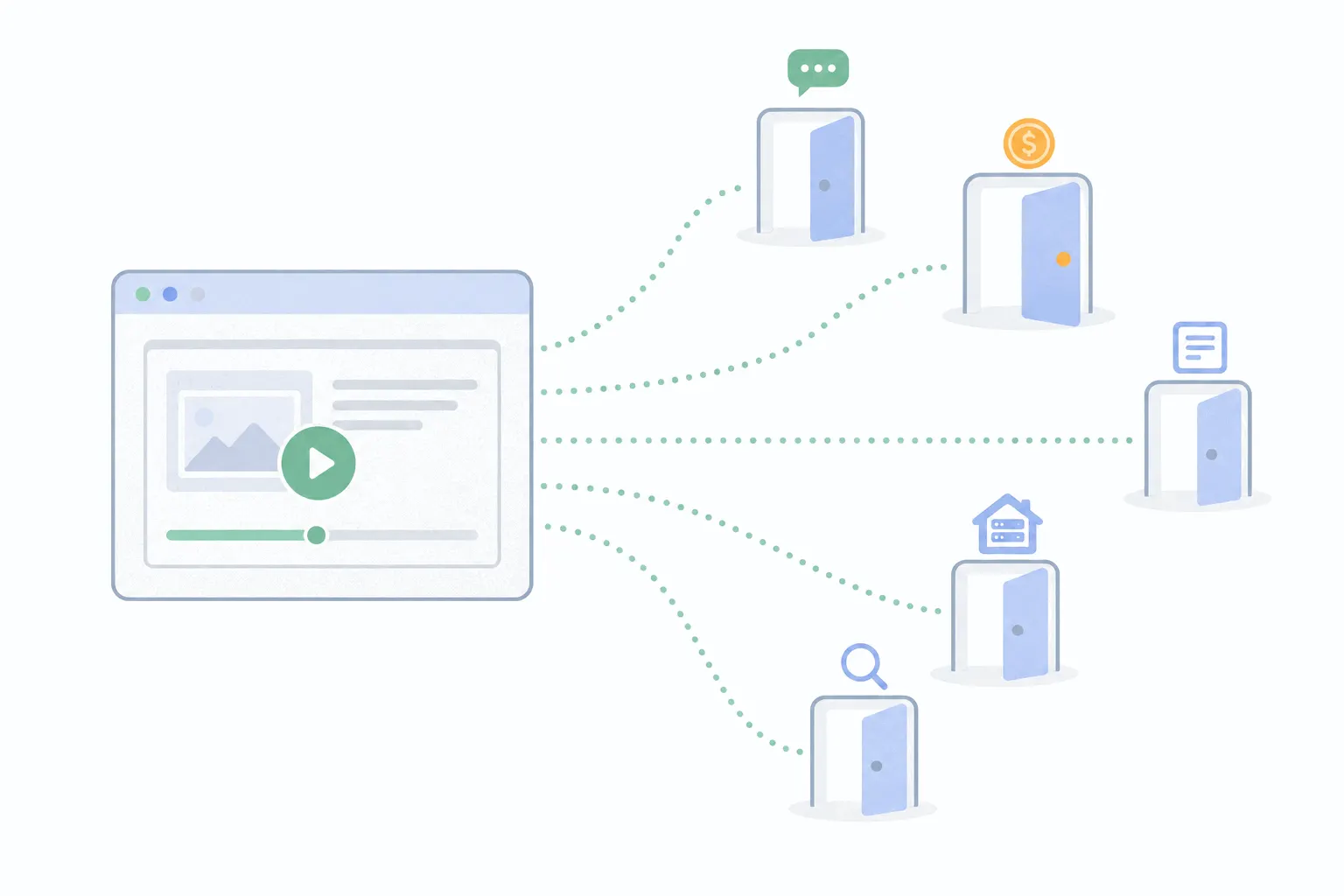
Clarity's own documentation is upfront about its trade-offs, and they fall into four groups.
Data lives for 30 days. Microsoft's FAQ, updated September 2026, states recordings and data are retained for your use for up to 30 days. A pattern you spot in November cannot be compared with September, and insights expire before a quarterly review does.
Your visitor data sits with Microsoft. The FAQ states the data is stored in Azure and that Microsoft has access to it. Its third-party cookies, per the same page, support operational purposes like advertising, and opting out of Clarity telemetry runs through the Digital Advertising Alliance system. None of that is hidden, and for some companies none of it is acceptable. Deleting one visitor's data is also all-or-nothing: the FAQ says removing a single user's data means deleting the whole project, which matters the day a GDPR erasure request arrives. In the EEA and UK, Clarity also now requires site owners to pass each visitor's consent status to Microsoft, and the session replay GDPR checklist covers what that duty involves.
It stops at watching. Clarity's feature list is recordings, heatmaps and machine-learning insights. There are no surveys or feedback forms, and no connection between a recording and what the visitor was worth, so it cannot answer which recordings cost you money.
If none of those bite, stop reading and keep Clarity. The rest of this page is for when one of them does.
What separates the alternatives
Every tool below has recordings and heatmaps, so the feature grids will not separate them. Four things will, and they are worth checking against your own situation before reading a single review:
- How long recordings are kept. Thirty days is the number that quietly decides whether you can compare this quarter with last. Ask it first, because vendors rarely volunteer it.
- What happens to the data. Who stores it, who can access it, and whether anything feeds an advertising ecosystem. The answer decides whether legal signs off, and it is different for every tool on this page.
- Whether recordings connect to your other numbers. A standalone player means watching at random. Recordings joined to traffic sources and revenue mean watching the sessions that cost you money.
- The asking side. Surveys and feedback widgets are bundled in some tools and absent in others. Fine either way, as long as you know which side of the line you need.
The feedback one: Hotjar
Hotjar built its name on pairing recordings and heatmaps with the asking side: popup surveys, feedback widgets and user interviews. That side is what Clarity lacks entirely, and it is the usual reason to move here. Watching shows what happened, and a two-question survey on the exit page is sometimes the fastest route to why.
A concrete example of what the asking side buys you: a recording shows five visitors in a row hesitating on the pricing page and leaving, and a one-question exit survey on that page collects the sentence a recording never contains, too expensive, or missing the one feature they came for. Teams that switched to Clarity for the price and found themselves guessing at motives are the natural returners.
The big 2026 change is corporate. Hotjar's site now redirects to Contentsquare, which states the two platforms have merged into one. The product bundles heatmaps, replays, surveys, funnels and error monitoring, and the free plan's recording allowance is now far larger than the small daily sample old Hotjar offered. The trade-off is that you are adopting a large platform mid-transition rather than the small friendly tool the last decade of blog posts recommended. The head-to-head is in Microsoft Clarity vs Hotjar, and the wider field in best Hotjar alternatives.
The connected one: Bigdelta
Clarity shows the visit and nothing around it. Bigdelta keeps recordings and heatmaps in the same place as web analytics and revenue, on one snippet, so a recording arrives with its context: where the visitor came from, what they did across the site, and what they were worth.
The practical difference is which recordings get watched. Instead of sampling sessions at random, you start from a number that bothers you, shoppers who reached checkout and left, say, and watch exactly those visits. Replays filter to sessions with rage clicks, dead clicks or a JavaScript error, and visits link to subscription revenue, so the channels and landing pages behind the money are in the same report as the recordings. Data stays on EU servers. The free plan covers sites under 100,000 page views a month, including a thousand replays.
The gap mirrors Clarity's: there is no survey or poll tooling. Anyone who wants the asking side needs one of the feedback tools on this page alongside it.
The friction hunter: Mouseflow
Mouseflow's pitch is breadth on the diagnosis side. Alongside replay and heatmaps it bundles conversion funnels, form analytics and friction detection, plus feedback surveys, seven tools its homepage counts off. Form analytics is the standout: field-by-field data on where people abandon a form is something neither Clarity nor most rivals offer natively.
The working example: a checkout form converts badly, the funnel names the form step, and form analytics names the field, the discount code box, say, where a third of the people who start typing give up. That specificity is the reason to pick a tool with form analytics over pairing Clarity with guesswork.
It also leans on trust positioning: the company describes recording every visit with no sampling, privacy by default, and European-built compliance, and it has a free plan. For a marketing team whose site lives and dies on forms and landing pages, this is the closest thing to a purpose-built kit.
The self-hosted one: OpenReplay
Every tool above holds your visitor data on its servers. OpenReplay is the exception: an open-source session replay and product analytics stack you can run on your own infrastructure, so recordings never leave machines you control. A hosted cloud version exists for teams that want the product without the ops work.
It bundles replay with funnels, journeys and built-in developer tools, and its positioning is data sovereignty for teams with compliance constraints. The honest cost is that self-hosting is an engineering commitment: someone has to run, upgrade and secure it. For a company whose legal team vetoed third-party recording tools outright, that trade is often the only acceptable one. The teams that pick it first are the ones handling regulated data, banking, health, government suppliers, where the simplest compliance answer to a recording tool is that the recordings never leave the building.
The ask-later one: FullStory
FullStory sits at the enterprise end. It captures every interaction automatically, no tagging decisions up front, and lets you ask questions of the archive afterwards: show everyone who clicked this button and then left. In 2026 it describes itself as a behavioural data platform, with replay as one feature among product analytics, journeys and AI agents that answer questions about the data.
The profile it fits is a company with a research or product team that will live in the tool. Without that person, most of what it charges for goes unused, and a smaller tool answers the questions a smaller team actually asks. The rest of the field at this end is covered in best session replay tools.
When Clarity is still the right pick
Free forever, no traffic limits and no sampling is a genuinely unusual offer, and Microsoft's FAQ commits to all three. A site that wants to check recordings occasionally, needs no surveys, treats each month's data as disposable and has no policy against the data living with Microsoft loses nothing by staying. The honest use of this page is to name which of those conditions stopped being true for you, and switch for that reason rather than for novelty.
How to choose
Match the tool to the reason Clarity stopped being enough.
Whichever way you lean, run the candidate alongside Clarity for two weeks before deciding. Both install with one script, the traffic is identical, and the tool you find yourself actually opening is the answer.
- You want to ask visitors questions: Hotjar, or Mouseflow if forms matter more than interviews.
- You want recordings connected to traffic sources, signups and revenue: Bigdelta.
- Your form or funnel is the whole business: Mouseflow.
- Data may not leave your infrastructure: OpenReplay, self-hosted.
- An enterprise team will live in the tool daily: FullStory.
- None of the above: stay with Clarity and spend the budget elsewhere.