Engagement rate vs conversion rate: which one to watch
One is an outcome, the other is a floor, and in GA4 one is partly computed from the other. The overlap mechanics, the four divergence patterns worth diagnosing, and why engagement belongs in the workroom while conversions go to the business.
Two different questions
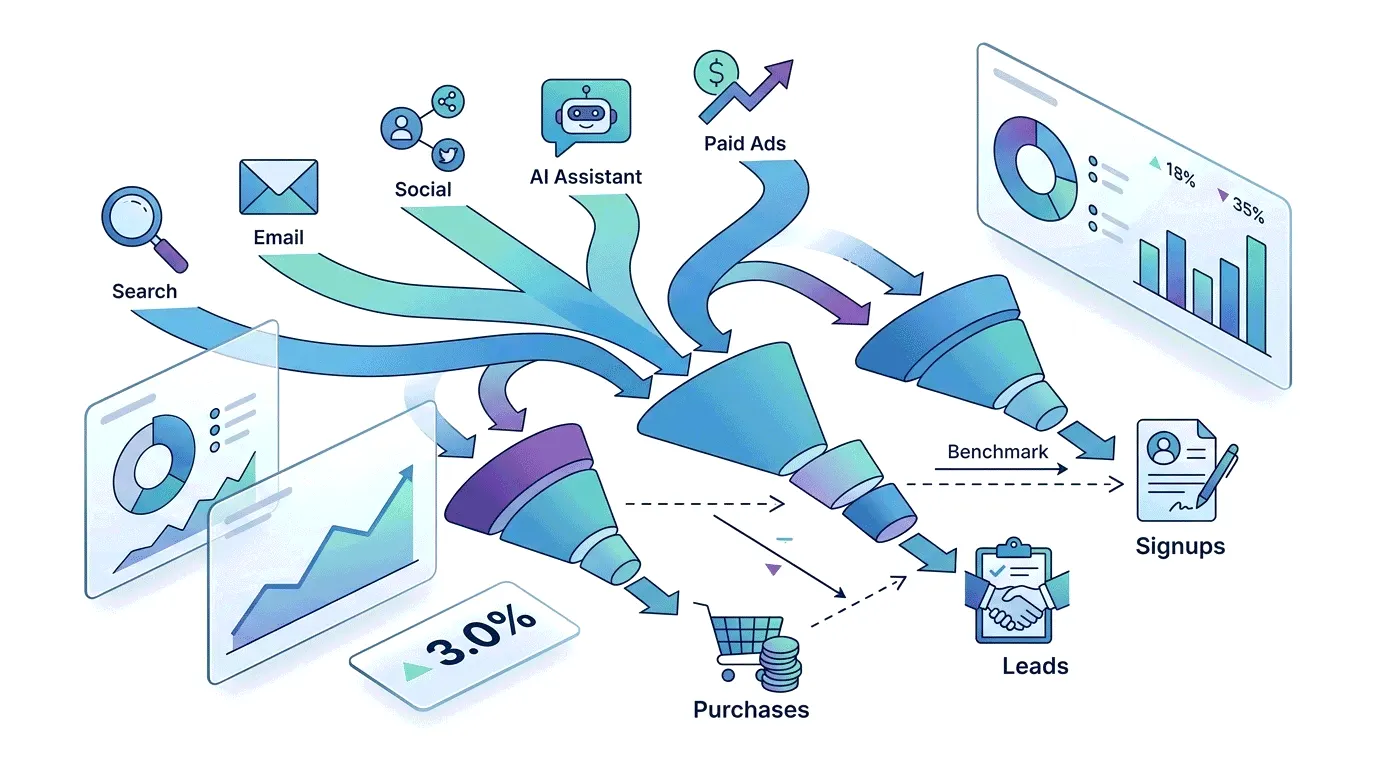
Conversion rate asks: did visitors do the thing the site exists for? In GA4's current vocabulary conversions are key events, the actions you explicitly marked as mattering, a purchase, a signup, a booked demo, and conversion rate is the share of sessions, or users, that included one. It is a business outcome measure, and it is the number a budget decision should touch.
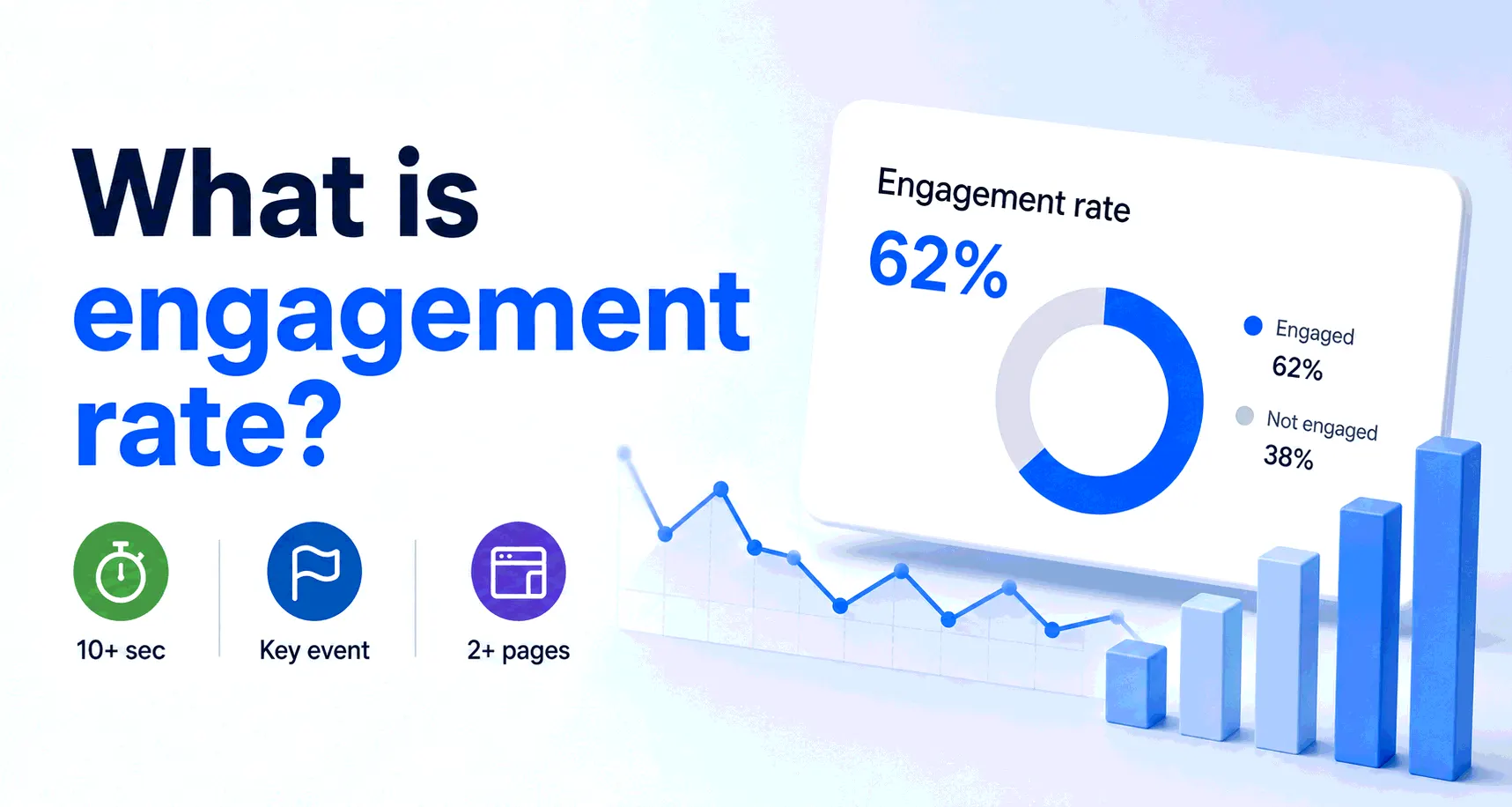
Engagement rate asks something much weaker: was the visit worth anything at all? GA4 counts a session as engaged if it lasted ten attentive seconds, or saw a second page, or triggered a key event. It is a floor, not a goal, a session that cleared it merely was not a drive-by. Treating engagement rate as a target confuses the smoke detector with the oven.
The overlap trap
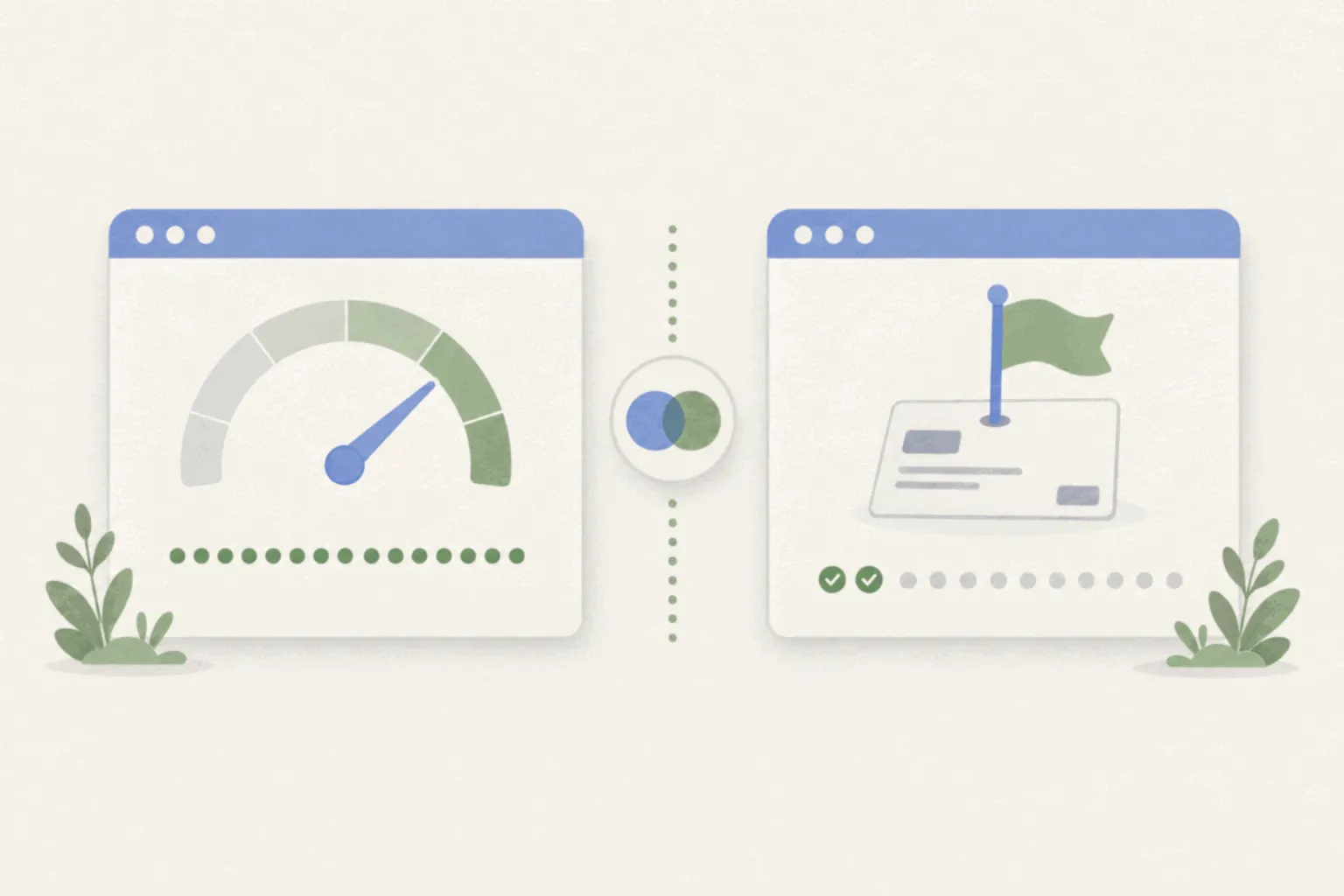
The definitions overlap by construction: any session with a key event is automatically an engaged session. Conversion sits inside engagement, which has two practical consequences.
First, engagement rate is partly downstream of your conversion configuration. Add a generous key event, mark a scroll or a video autoplay as key, and engagement rate rises mechanically along with conversion rate, no visitor having changed. Two sites' engagement rates are not comparable without knowing their key-event lists.
Second, the interesting slice is the gap between the two rates: sessions that engaged but did not convert. That slice is where diagnosis lives, because it holds the visitors who gave you attention and left without the outcome.
When they diverge, and what it means
High engagement, low conversion is the classic gap: people read, scroll and browse, then do not sign up or buy. The traffic is interested and something downstream is failing, the offer, the price, the form, the trust signals, and this is the pattern where funnel analysis and session replays earn their keep, because the blocker is usually visible on the page.
Low engagement, decent conversion looks alarming and often is not. Utility traffic behaves this way: a visitor arrives knowing what they want, does it in eight seconds on one page, and leaves. The engagement metric calls that session worthless while the register rings. Sites with fast task-completion patterns should expect this shape and resist fixing it.
Both low is not a page problem, it is a traffic problem. Visitors who neither linger nor convert mostly should not have arrived, and the work is upstream in targeting and channels, not in the layout.
Both high means it is working, and the job is to protect the causes while scaling, which is harder than it sounds.
Which to watch, when
Watch conversion rate as the outcome, benchmarked against your own history and honest external figures. Watch engagement rate as a diagnostic, segmented by channel, where its movements explain conversion movements: a conversion dip with engagement steady points at the funnel, a dip in both points at the traffic. Report conversions to the business; keep engagement in the workroom. And when either number needs a reference point, the engagement benchmarks come with the configuration caveats attached, because the first thing to check before trusting either rate is what your own key-event list is quietly doing to both.