The August 2026 Google spam update, explained
Google rolled out its third spam update of the year between August 18 and 21. If your organic traffic moved that week, here's how to tell whether this was the cause — and what to do about it either way.
What Google shipped
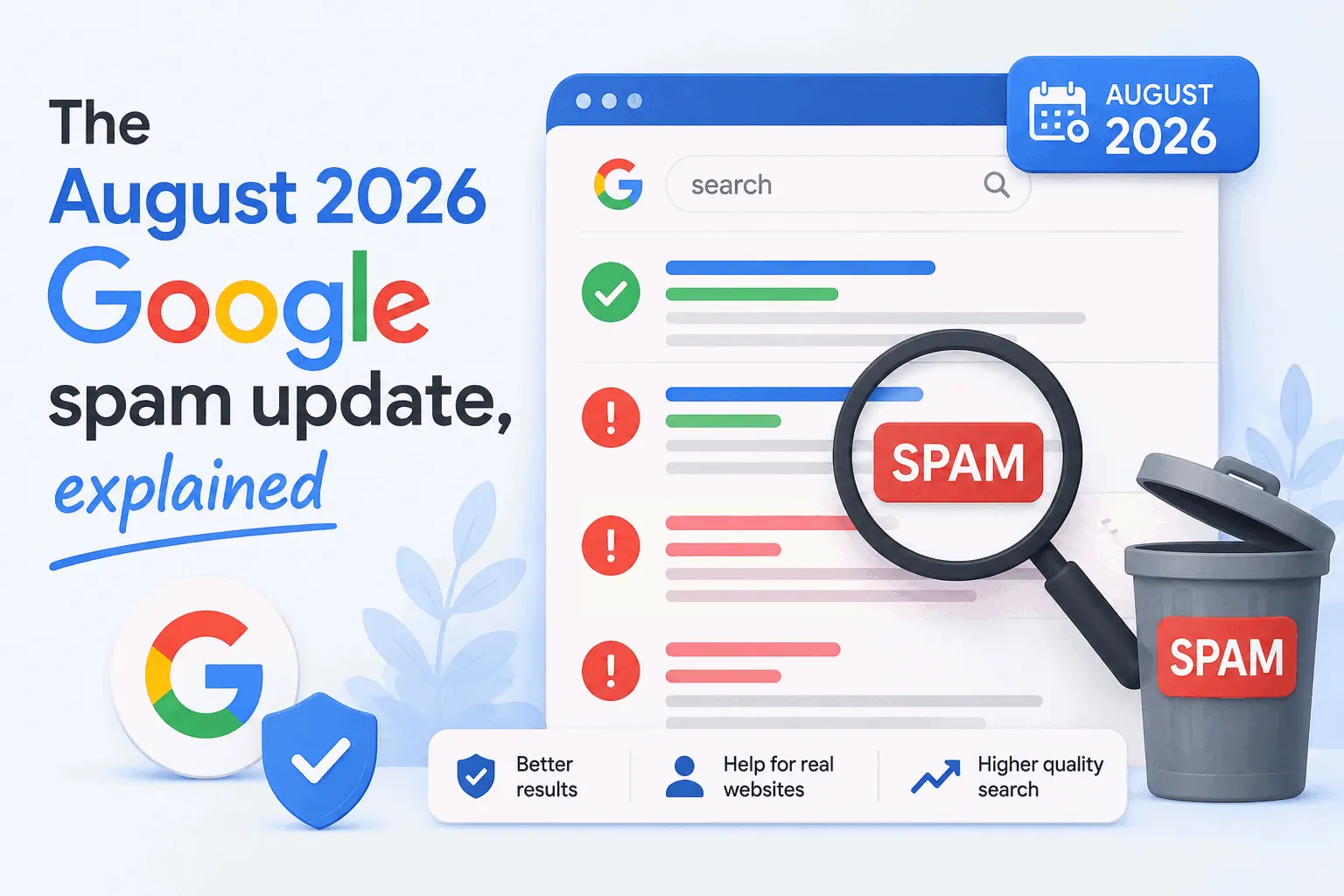
On August 18, 2026, Google announced the August 2026 spam update on its Search Status Dashboard: "Released the August 2026 spam update, which applies globally and to all languages. The rollout may take a few days to complete." It finished faster than that warning suggests — the dashboard marked it complete on August 21, roughly two and a half days after it began.
This is the third spam update of 2026, after one in March and one in June. Google announced no new spam policies alongside it. That makes it routine enforcement: the same rules, applied by retrained systems that have gotten better at spotting violations of them.
What a spam update actually is
Google's spam detection runs on an automated system it calls SpamBrain. A spam update is a refresh of that system — new training, new patterns it has learned to catch — pushed into the live rankings over a few days. Pages the system now classifies as spam rank lower or disappear from results; pages that were previously buried under spam can drift up without changing anything.
Two things a spam update is not. It's not a core update: core updates reassess quality and relevance broadly, and a decent site can lose ground in one without doing anything wrong. Spam updates are narrower — they target pages violating specific published policies. And it's not a manual action. Manual actions are penalties applied by a human reviewer, and they come with a notification in Search Console's manual actions report. A spam update notifies nobody. Your only evidence is the traffic graph and the rollout dates.
What counts as spam
The policies read like a catalog of two decades of ranking tricks, and most site owners have never done any of it: hidden text, keyword stuffing, cloaking (showing Google different content than visitors), doorway pages, sneaky redirects, scraped content, link schemes, and hacked pages injected into legitimate sites.
The newer entries are the ones worth reading if your site publishes at volume. Scaled content abuse covers mass-produced pages that exist to rank rather than to help anyone — the policy Google usually cites when AI-generated content farms lose visibility. Site reputation abuse covers third-party content piggybacking on a strong domain's authority, like coupon or review sections rented out to an outside operator. Expired domain abuse covers buying a dead domain with a good reputation and filling it with unrelated content.
Google's own documentation concedes that automated classifiers make mistakes, and a legitimate site can occasionally get caught. Rare, but it happens.
How to tell if this update hit you
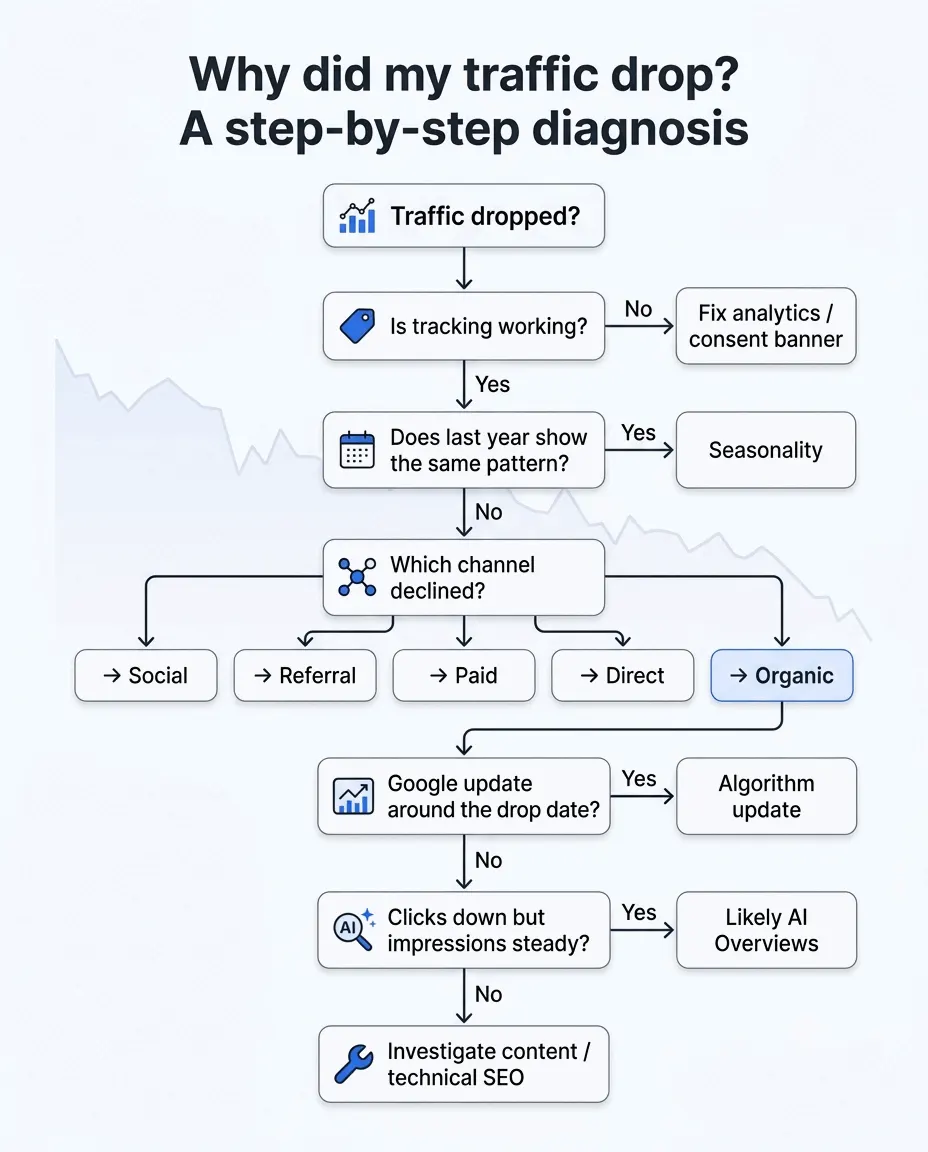
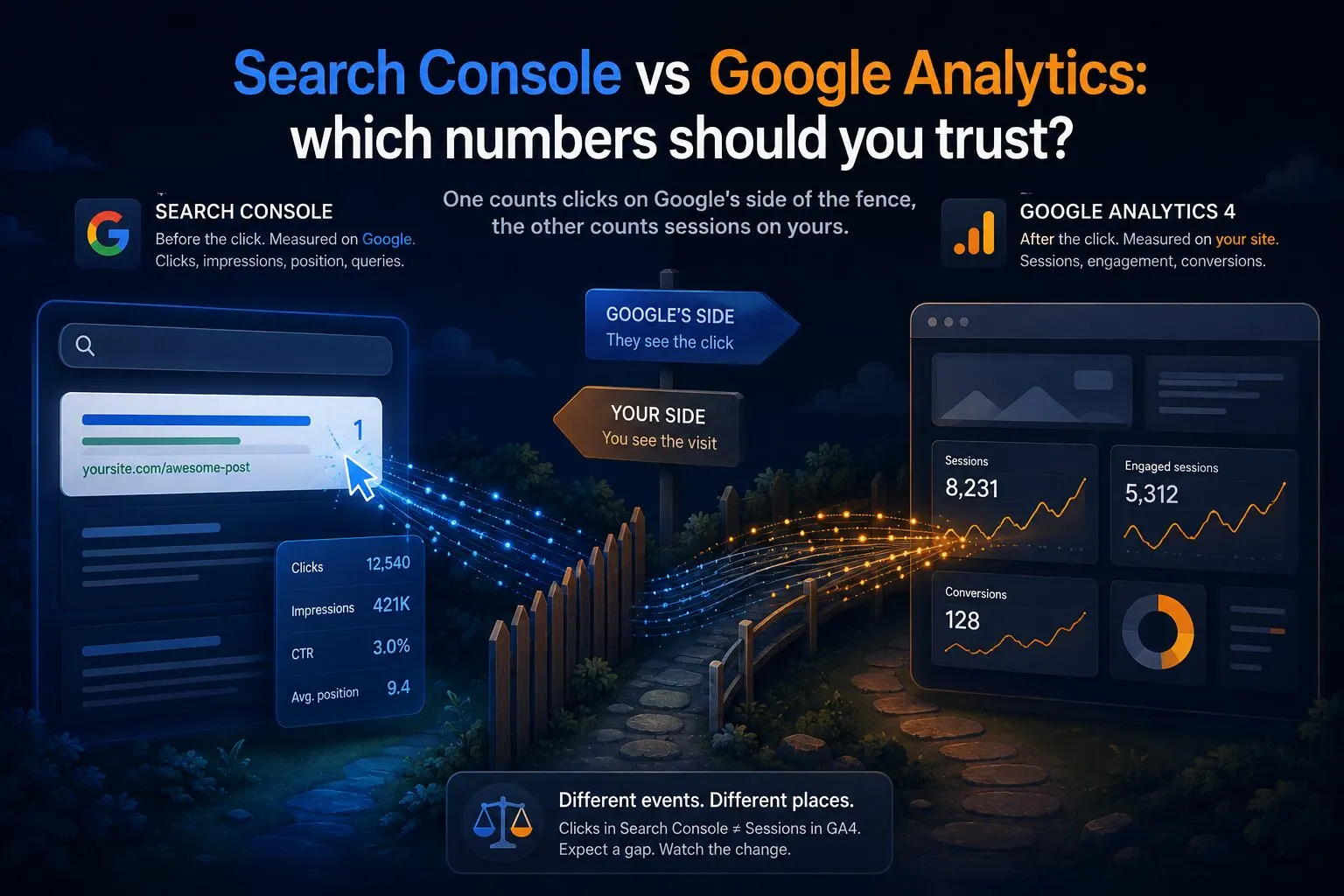
Open Search Console and compare organic clicks, impressions and average position before and after the rollout window: August 18 to 21. (Analytics tools and Search Console count differently, so do this check on Search Console's side, where the click data comes from Google directly.)
An update hit has a recognizable shape: position slips across many queries at once, impressions and clicks fall together, and the decline starts inside the window. A drop that began on August 15, or that lives entirely in one traffic source other than organic search, is a different investigation.
One wrinkle specific to spam updates: full page removal. Where a core update usually demotes, a spam classifier can drop pages out of results entirely — so also check whether impressions for affected pages went to zero rather than just down.
If you were hit
Start by checking the manual actions report in Search Console, because that would change the diagnosis — a manual action comes with a stated reason and a reconsideration process. Empty report and a drop inside the window means the algorithmic update is the likely cause.
Then read the spam policies against your own site, honestly. The usual suspects on otherwise-legitimate sites: a mass of thin programmatic pages, aggressive guest-post link building, a rented-out subdirectory, or a hack you don't know about — hacked content is the violation owners discover last, so check Search Console's security issues report too.
Google's own guidance on recovery is blunt: fix the violations, then wait. Its systems revalidate sites over months, and recovery often lands at a subsequent update rather than gradually. There is no form to fill out and no quick fix — which also means anyone selling a fast spam-update recovery is selling something else.
If you've read the policies and genuinely find nothing, the least bad move is patience: document what happened, keep the site clean, and see where the next update leaves you. Classifier mistakes tend to be corrected by the same mechanism that made them.
If you weren't hit
Most sites weren't, and there is nothing to do — except one five-minute habit that pays off for years: write the rollout dates down where your team will find them. Every future "why does the graph dip in late August?" conversation gets answered by that note. If your analytics tool supports annotations, add one on August 18; if not, a line in a shared doc works. Some sites will also see a small rise from this update — spam getting removed from results means someone inherits its positions — and that's worth a note too, so nobody builds a growth story on it.
The practical takeaway
The August 2026 spam update ran from August 18 to 21, globally, with no new policies attached. Check Search Console against those dates before blaming (or crediting) it for anything. If you were hit, the path is unglamorous: find the violation, fix it, wait for revalidation. If you weren't, annotate the dates and move on — the regular traffic checks you already do are the mechanism that catches the next one early.