How to estimate a website's traffic
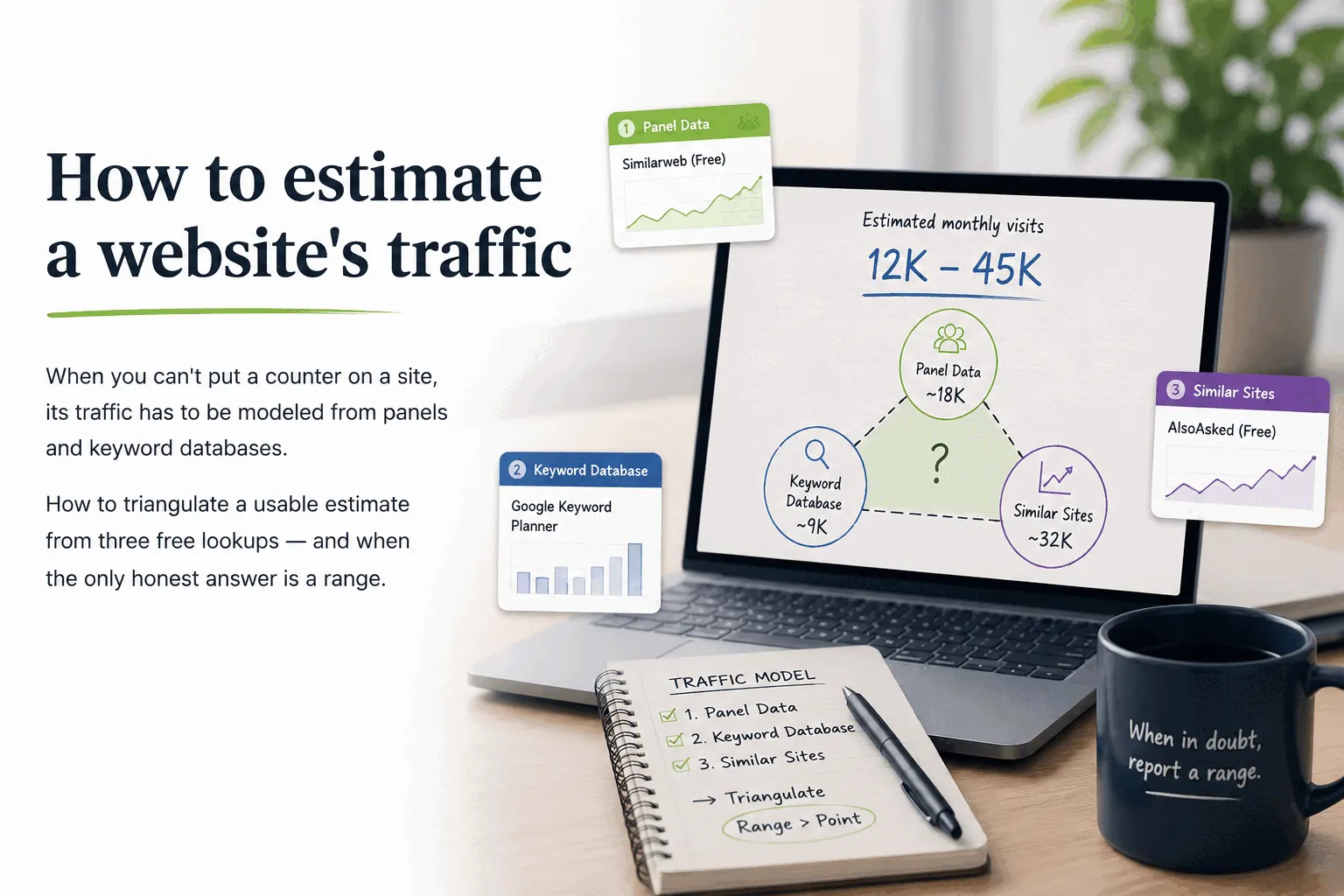
When you can't put a counter on a site, its traffic has to be modeled from panels and keyword databases. How to triangulate a usable estimate from three free lookups — and when the only honest answer is a range.
Where traffic estimates come from
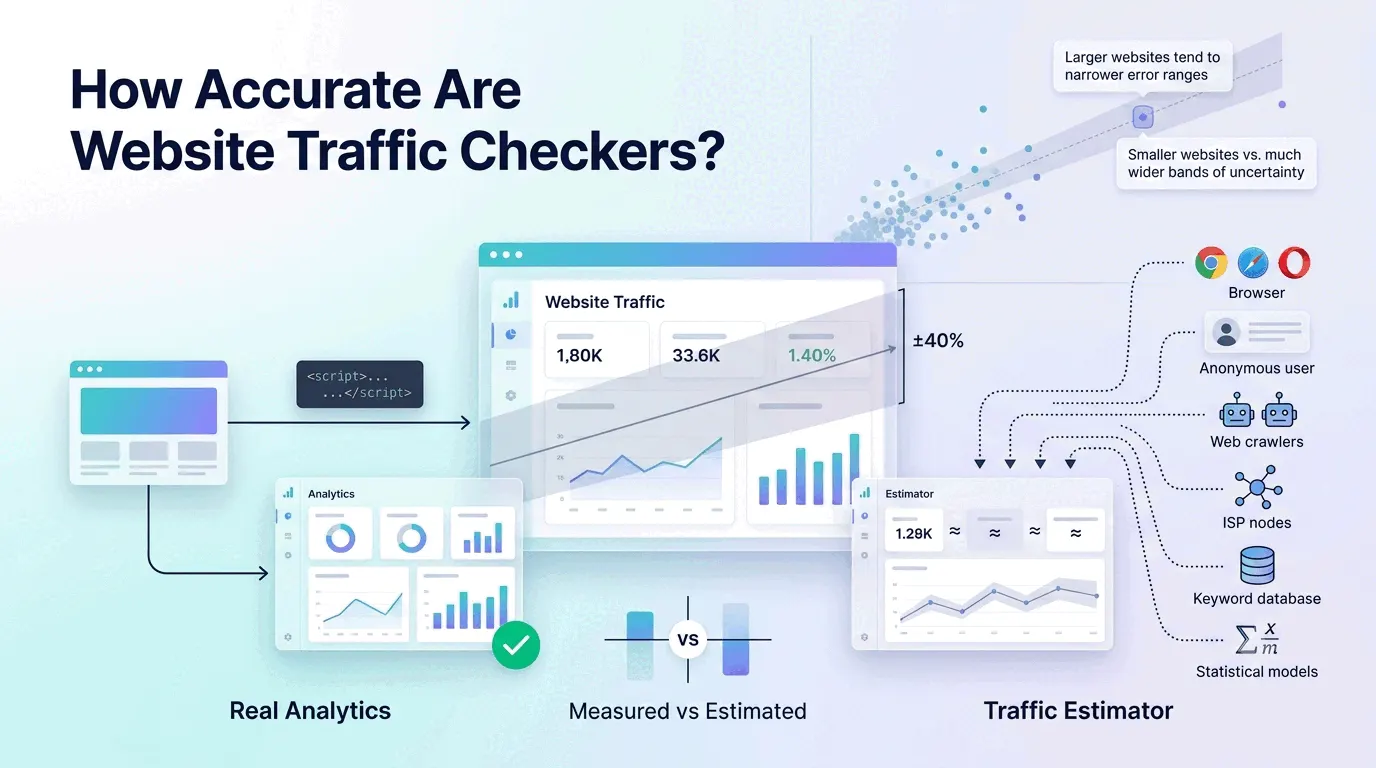
Without a counter on the site, traffic can only be modeled, and the models come in two families. Clickstream panels — SimilarWeb's method — watch where a large sample of consenting users browse and extrapolate to the whole internet. Keyword databases — the Ahrefs and Semrush method — take the keywords a site ranks for, combine positions with search volumes and click-through rates, and sum up an organic-traffic estimate. The mechanics and their failure modes are unpacked in how accurate are website traffic checkers; what matters here is that neither model has ever seen the site's actual numbers.
The triangulation method
A usable estimate takes three lookups and five minutes:
- Run the domain through SimilarWeb, Ahrefs' traffic checker and Semrush, and write down all three figures.
- Check the spread. Figures within a factor of two of each other mean the site is big enough for the models to grip — treat the range itself as the answer: 'somewhere between 80K and 150K monthly visits'.
- Keep track of what each number covers. The Ahrefs and Semrush figures are search traffic only, so they set a floor under the total rather than competing with SimilarWeb's all-channel estimate.
How wrong should you expect to be?
First rule: quote the range, never a midpoint. A range is honest about the error bars; a single figure averaged out of three disagreeing models is false precision.
There is calibration data. Screaming Frog compared estimator output against real analytics on 25 sites: SimilarWeb landed closest on average but swung past 50% either way on individual sites, Ahrefs ran about 36% low, Semrush about 42% low. The practical translation: for a mid-sized site, a triangulated estimate is good to within a factor of two — not to the digit, and not to the percent.
Can you estimate a small website's traffic?
Below roughly 10,000 visits a month the models thin out: panel coverage drops to a handful of members and the extrapolation multiplies their noise. Many small sites return no estimate at all, or one wrong by multiples. At that point, stop estimating the total and read what's actually visible — whether the site ranks for anything (Ahrefs lists the keywords), how often it publishes, whether anyone engages with it. For a site the tools can't see, the right answer is 'small', not a number.
Two shortcuts that beat modeling
If the site is yours, don't estimate — a free analytics snippet counts the real thing within minutes. And if the site sells advertising, ask: publishers hand out media kits with traffic figures to anyone who might buy an ad. Read those knowing the sales team wrote them, but a self-reported count usually beats a model that never saw the site.
The practical takeaway
Three lookups, a range instead of a number, the search-tool figures as a floor, and factor-of-two error bars carried visibly into whatever you write down. For big sites the routine produces a genuinely useful answer. For small ones it tells you the site is small — which is an answer too.