Heatmaps vs. session replay: what's the difference?
One shows a thousand visitors on a single page, the other shows one visitor across a whole visit. When each is the right tool — and the specific ways each one lies.
Same events, two altitudes
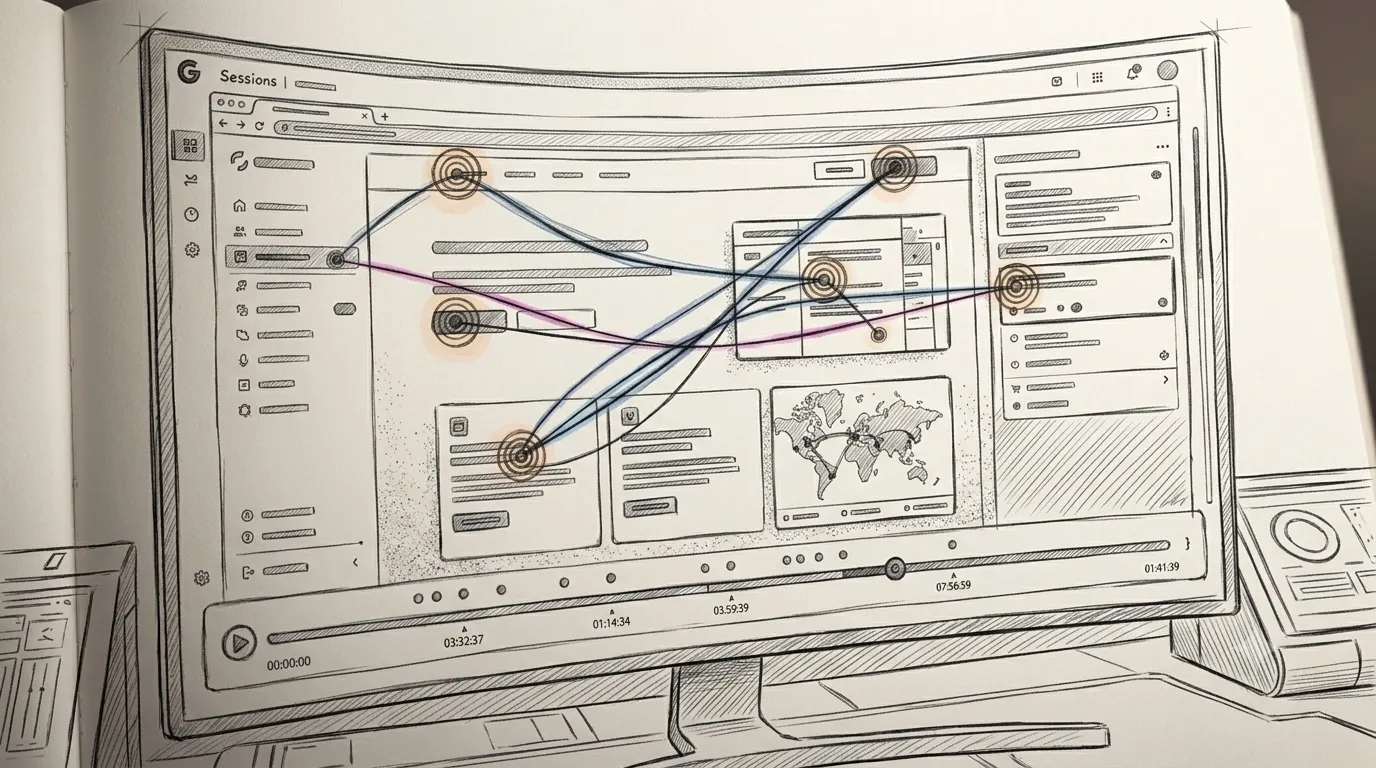
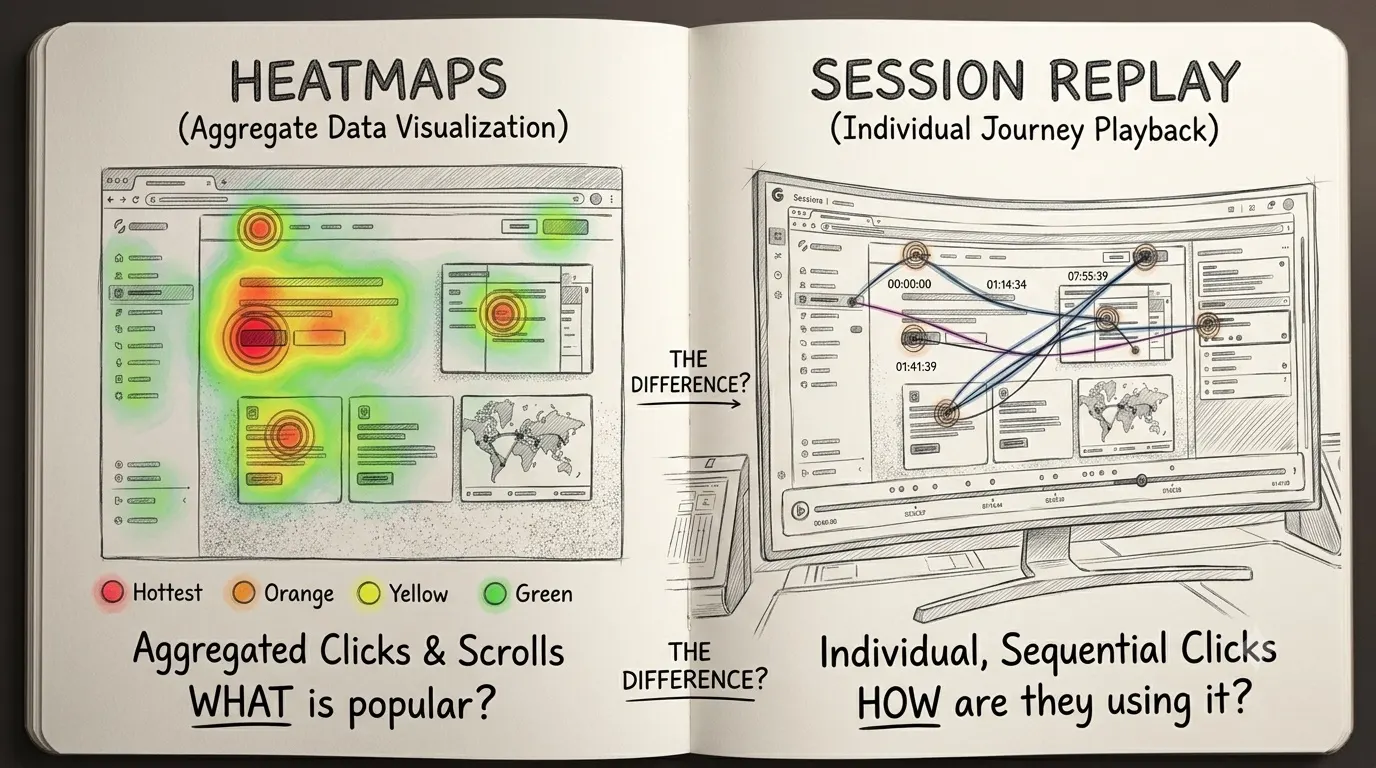
Heatmaps and session replay are built from the same raw material — the stream of clicks, scrolls and cursor movements a tracking script collects. The difference is altitude. A heatmap aggregates that stream across hundreds or thousands of visitors and paints it onto one page: where the clicks land, how far the scrolling reaches. A session recording goes the other way: one visitor, full sequence, every page of the visit. A census of a page versus a biography of a visit.
That makes them answers to different questions, and most of the 'versus' framing dissolves once the questions are named. 'Where on this page do people stop?' is a heatmap question. 'What happened to the people who stopped?' is a replay question.
What heatmaps answer
Three maps, usually. Click maps show where visitors clicked — including the reliably humbling category of clicks on things that aren't clickable. Scroll maps show what share of visitors reached each depth of the page, which is where false bottoms — layouts that look finished and hide the CTA below — get caught. Move maps trace cursor position, a loose and much-debated proxy for attention, best treated as the weakest of the three.
Their strength is speed and statistics: thirty seconds of looking, no watching required, and the picture is an aggregate rather than an anecdote. The classic finds — false bottoms, ignored CTAs, rage-clicked screenshots — surface faster in a heatmap than any other way.
What replay answers
Recordings carry the two things aggregation destroys: sequence and context. A heatmap can show a cold CTA; only a recording shows the visitor scrolling past it mid-hunt for pricing, or circling a form field, backing out, returning and giving up. Replay is where 'what happened' becomes 'what it was like'.
It's also the only one of the two that catches bugs: the dropdown that doesn't open on iOS, the validation error that wipes a form. Aggregates smooth those into a slightly worse conversion rate; a recording shows the failure happening.
How each one lies
Heatmaps lie by averaging. A page's mobile and desktop layouts differ, so a blended map paints clicks onto elements half the visitors never saw — always split by device before believing one. Segments blend the same way: a map mixing paying users and first-time visitors describes nobody. And on low-traffic pages a heatmap renders confident-looking color out of forty visits; the palette doesn't disclose its sample size.
Replay lies by anecdote. A vivid recording sticks in memory with the weight of data, one frustrated visitor can trigger a redesign the funnel never asked for, and unfiltered watching consumes afternoons. The discipline is symmetrical: heatmaps need enough traffic to mean anything, recordings need enough repetition — three failures at the same spot — to count as a pattern.
Use them in order, not in competition
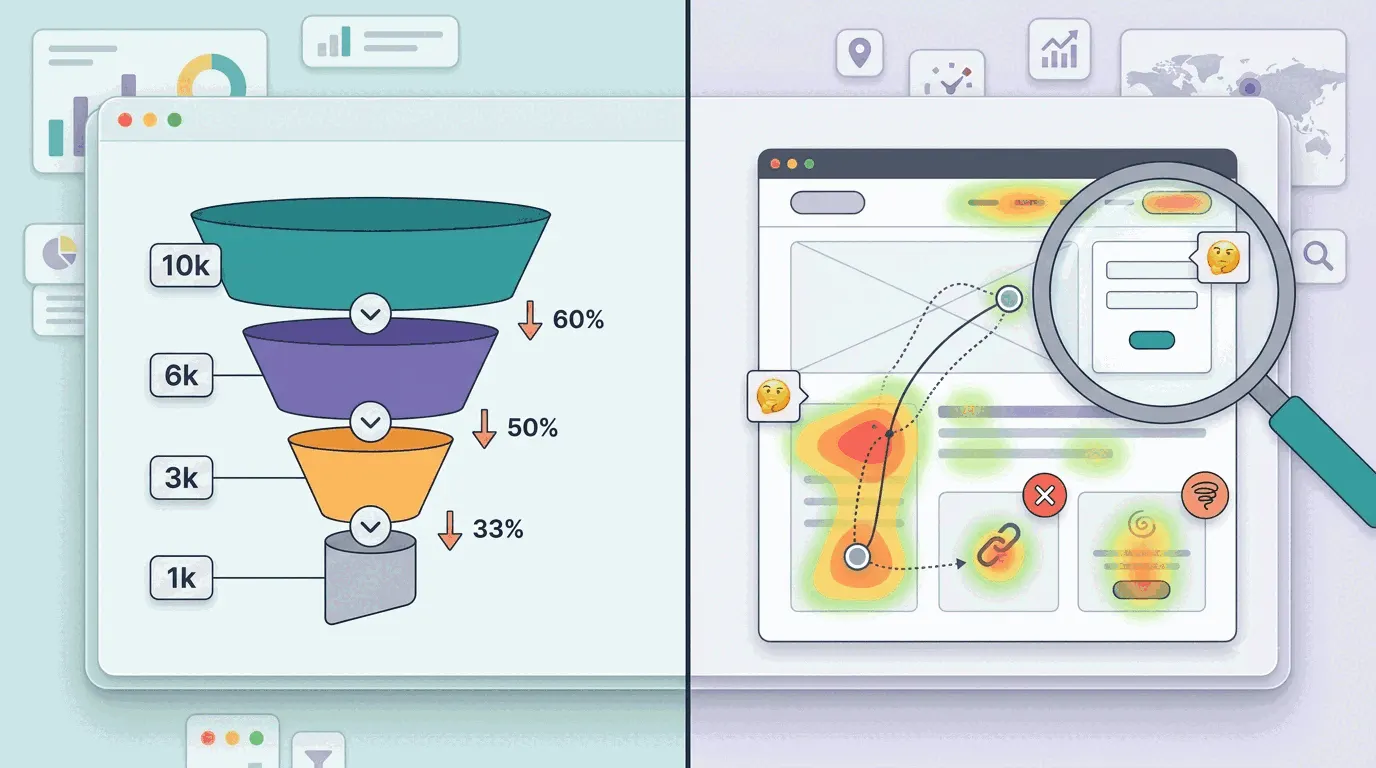
The workflow runs coarse to fine: the funnel names the page that's losing people, the scroll and click maps say where on the page attention dies, and recordings filtered to the strugglers say why. Skipping straight to recordings wastes time on healthy pages; stopping at the heatmap leaves the diagnosis at 'somewhere around the form'. The full sequence is in how to see where users get stuck.
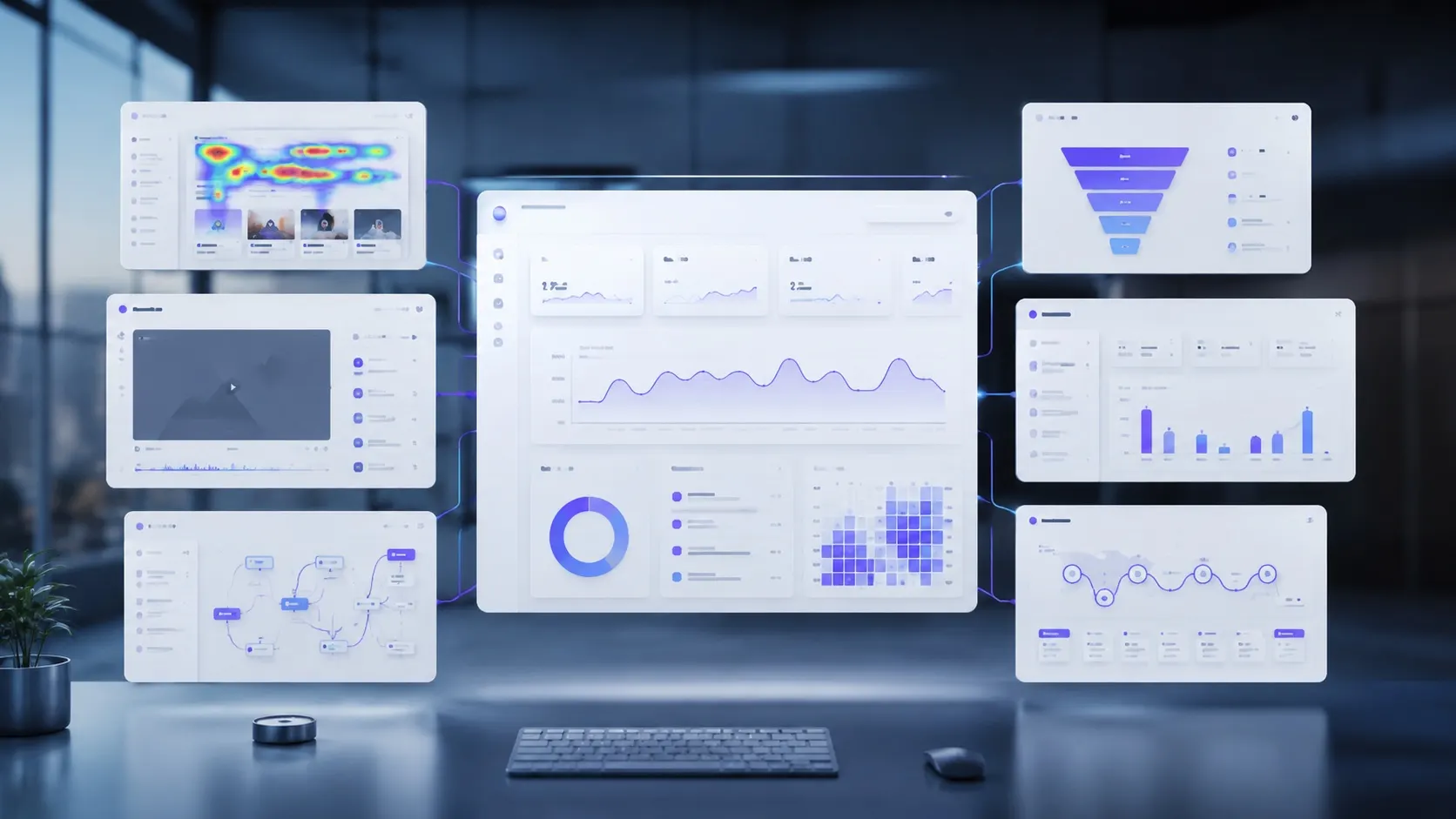
In Bigdelta the funnel, the heatmaps and the recordings run on the same data, so the segment that dropped at a step is the same segment whose recordings you watch — no export, no stitching.
The practical takeaway
Treat the pair as one instrument with a zoom dial: heatmaps for the aggregate view of a single page, replay for the lived sequence of a single visit. Reach for the map when the question starts with 'where' or 'how many', for the recording when it starts with 'why' or 'what happened', and let the funnel decide which page deserves either. Used in that order, the two close the distance between a drop-off number and a fix — which is the whole job.